Quick overview
This is some text inside of a div block.
.png)
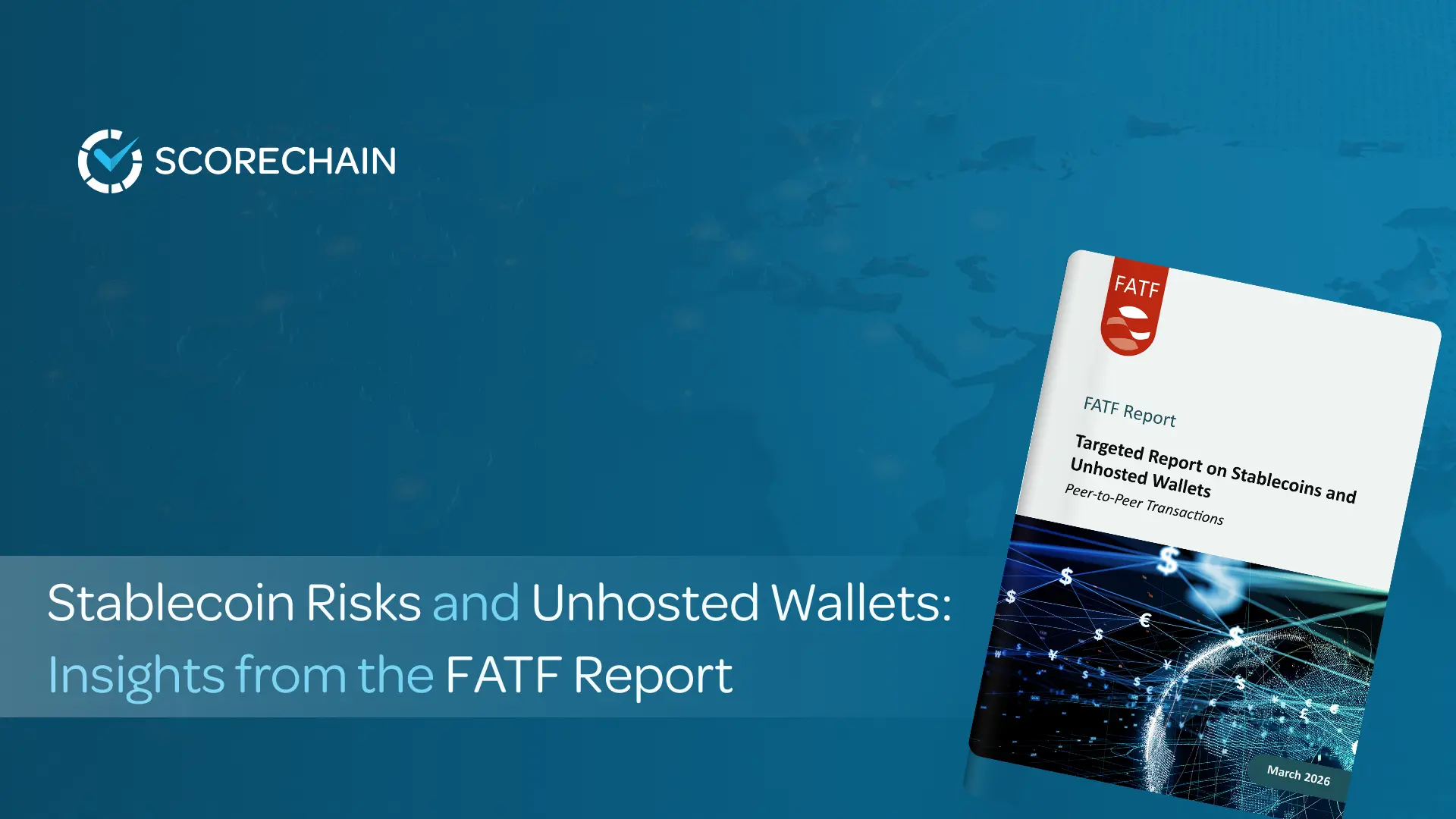
Stablecoins have become a core settlement layer in digital asset markets, but their rapid adoption also introduces new financial crime risks. The FATF report on stablecoins and unhosted wallets highlights how illicit actors increasingly use stablecoins for laundering and settlement, particularly through peer-to-peer transfers and cross-chain transactions. For compliance teams and regulators, blockchain analytics and transaction monitoring are becoming essential tools for identifying suspicious activity and tracing illicit funds.
The FATF report highlights how stablecoins are increasingly used within illicit financial flows and how peer-to-peer transactions through unhosted wallets create new compliance challenges. As stablecoin adoption grows across digital asset markets, regulators and compliance teams must rely more heavily on blockchain analytics and transaction monitoring to detect suspicious activity and trace illicit funds.
Stablecoins have become a fundamental part of the digital asset ecosystem. Their price stability, liquidity, and accessibility make them widely used for trading, payments, and cross-border transfers across blockchain networks.
As adoption expands, regulators and compliance teams are paying closer attention to the risks associated with stablecoin transactions. The Financial Action Task Force recently released a targeted report analysing the role of stablecoins and unhosted wallets in illicit finance.
The report examines how threat actors use stablecoins within laundering schemes, how peer-to-peer transactions can create visibility gaps for anti-money laundering monitoring, and how compliance frameworks must evolve as digital asset markets grow.
For organisations operating in the crypto ecosystem, the report provides important insights into the changing landscape of financial crime risk.
Stablecoins have experienced rapid growth over the past few years and now represent a significant portion of activity in digital asset markets.
According to the FATF report, more than 250 stablecoins are currently in circulation and the market capitalisation of stablecoins exceeded 300 billion dollars in 2025. Stablecoins also account for roughly 30 percent of on-chain crypto transaction volume, with daily trading volumes reaching around 156 billion dollars.
These figures illustrate how stablecoins have evolved from niche crypto instruments into an essential settlement layer within the broader digital asset ecosystem.
Financial institutions, fintech platforms, and virtual asset service providers increasingly rely on stablecoins to support trading infrastructure, payment rails, and cross-border transactions.
However, the same features that support legitimate use cases can also be exploited by illicit actors.
The FATF report highlights several characteristics that make stablecoins appealing for illicit finance activity.
Stablecoins maintain a relatively stable value compared with other digital assets such as Bitcoin or Ether. This stability reduces exposure to price volatility and allows illicit actors to move or store funds without risking large fluctuations in value.
Stablecoins also offer high liquidity and global accessibility. They can be transferred quickly across borders and exchanged on multiple platforms, which makes them efficient tools for transferring value.
These characteristics have contributed to the increasing use of stablecoins in various forms of illicit activity, including ransomware payments, fraud schemes, sanctions evasion, and terrorist financing.
Blockchain analysis referenced in the report indicates that stablecoins now represent a large share of illicit crypto transaction volume, reflecting the growing role they play in cyber-enabled financial crime.
One of the key themes of the FATF report is the growing role of unhosted wallets in digital asset transactions.
Unhosted wallets, often referred to as self-custody wallets, allow users to control their own private keys and hold digital assets without relying on an intermediary such as a cryptocurrency exchange or custodial wallet provider.
Peer-to-peer transfers between unhosted wallets occur directly on the blockchain and can take place without the involvement of regulated institutions.
Because these transactions occur outside traditional financial intermediaries, they can create visibility gaps for compliance teams. In many cases there is no financial institution responsible for performing customer due diligence or reporting suspicious transactions.
While transactions remain visible on public blockchains, identifying the individuals or entities behind wallet addresses can be challenging. As a result, investigations increasingly rely on blockchain analytics rather than institutional reporting mechanisms.
The FATF report identifies peer-to-peer transfers through unhosted wallets as a significant vulnerability within the stablecoin ecosystem.
Another challenge highlighted in the report is the growing use of cross-chain activity by criminal actors.
Threat actors often move funds across multiple blockchain networks to fragment transaction trails and obscure the origin of funds. Techniques such as chain hopping, cross-chain bridges, and layered wallet transfers are commonly used to complicate tracing efforts.
Stablecoins frequently circulate across networks including Ethereum, Tron, and Solana. Although this interoperability supports legitimate use cases such as decentralised finance and global payments, it can also make investigations more complex when funds move rapidly between blockchains.
By transferring funds across multiple networks, illicit actors can create additional layers of complexity that investigators must analyse when tracing the movement of funds.
Despite these challenges, blockchain technology also provides valuable transparency for investigators and compliance teams.
Transactions on public blockchains are permanently recorded and can be analysed using specialised analytics tools. These tools help investigators identify suspicious transaction patterns, trace the movement of funds across wallets and networks, and detect exposure to high-risk entities.
The FATF report highlights the growing importance of blockchain analytics platforms in detecting and monitoring suspicious activity within the digital asset ecosystem.
By combining blockchain analysis with traditional financial intelligence and regulatory reporting, authorities can better understand complex transaction networks and identify illicit financial flows.
As stablecoin adoption continues to grow, blockchain intelligence is becoming an essential component of modern crypto compliance frameworks.
The findings of the FATF report reinforce an important shift in how financial crime risks are managed in digital asset markets.
Stablecoins are becoming an increasingly important component of digital asset infrastructure. At the same time, peer-to-peer transactions through unhosted wallets and cross-chain activity introduce new investigative challenges.
For regulators, financial institutions, and virtual asset service providers, understanding blockchain transaction flows is becoming a core capability for effective compliance.
Organisations that combine transaction monitoring, blockchain analytics, and regulatory expertise will be better positioned to detect illicit activity and manage financial crime risks in digital asset ecosystems.
Stablecoins have become a central settlement layer within digital asset markets and now represent a significant share of crypto transaction activity.
Illicit actors increasingly rely on stablecoins due to their price stability, liquidity, and ability to move value quickly across borders.
Peer-to-peer transfers through unhosted wallets create visibility gaps for compliance teams because they can occur without regulated intermediaries.
Cross-chain transactions and layered wallet structures are commonly used to obscure the origin of funds and complicate investigations.
Blockchain analytics tools play a critical role in identifying suspicious transaction patterns and tracing illicit fund movements.
Stablecoins are digital assets designed to maintain a stable value by linking their price to a reference asset such as a fiat currency. They are widely used for payments, trading, and settlement within digital asset markets.
Stablecoins provide price stability, high liquidity, and fast global transfers. These characteristics make them attractive for criminal actors who want to move or store illicit funds without exposure to price volatility.
Unhosted wallets are digital asset wallets controlled directly by users rather than by a financial institution or exchange. Users hold their own private keys and can transfer assets directly to other wallets without an intermediary.
Cross-chain transactions allow digital assets to move across multiple blockchain networks. While this enables interoperability, it can also fragment transaction trails and make investigations more complex.
Blockchain analytics tools analyse transaction data recorded on public blockchains to identify suspicious behaviour, trace fund flows, and detect connections between wallet addresses and illicit activity.