Crypto Mining
Crypto mining is the process where computers solve complex puzzles to validate transactions, add them to the blockchain, and earn new cryptocurrency as rewards.
Crypto mining is the process where computers solve complex puzzles to validate transactions, add them to the blockchain, and earn new cryptocurrency as rewards.

















Every transaction on a proof of work blockchain needs to be verified and recorded. The process that makes this happen is called crypto mining.
Crypto mining is the computational process through which new transactions are validated, added to the blockchain and new cryptocurrency is brought into circulation. Miners compete to solve complex cryptographic puzzles and the first to succeed earns the right to add the next block of transactions and receives a block reward in return.
It is the backbone of networks like Bitcoin and the mechanism that keeps them secure, decentralized and trustless without any central authority overseeing the process.
The process follows a clear sequence:
This cycle repeats approximately every 10 minutes on the Bitcoin network, continuously extending the blockchain.
Mining has evolved significantly since Bitcoin's early days:
Miners are compensated through two sources:
On the Bitcoin network, the block reward started at 50 BTC in 2009 and halves approximately every four years in an event known as the Bitcoin Halving. The most recent halving in 2024 reduced the reward to 3.125 BTC per block. This controlled supply mechanism is central to Bitcoin's scarcity and long-term value proposition.
Crypto mining is energy intensive by design. The computational work required to secure the network demands significant electricity. This has prompted ongoing debate about the environmental impact of mining operations.
In response, a growing share of mining activity is powered by renewable energy sources including hydroelectric, solar and wind power. Some miners also utilize stranded or excess energy that would otherwise go to waste, positioning mining as a potential tool for energy grid balancing.
Mining sits in a complex regulatory space globally. Key areas of scrutiny include:
As regulatory frameworks like MiCA and FATF guidelines continue to evolve, mining operations and businesses receiving mined crypto face increasing compliance obligations.
For exchanges and custodians receiving deposits from mining operations, verifying the legitimacy of mining revenue is an important compliance step. Mining wallets can be screened on-chain to confirm that rewards originate from recognized mining pool addresses rather than from high-risk or illicit sources.
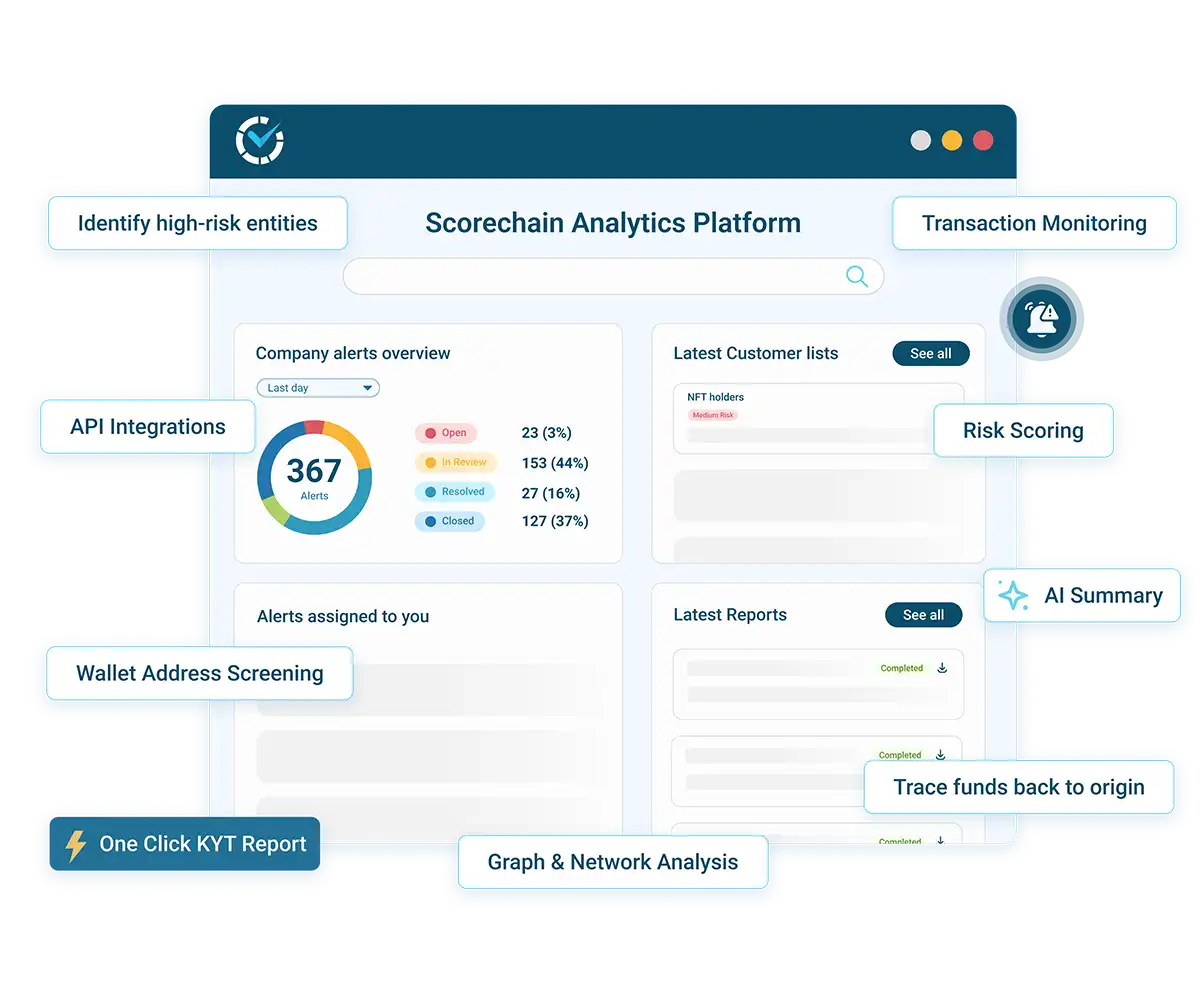
Whether you are an exchange receiving deposits from miners, a custodian managing mining treasury funds, or a compliance team assessing the source of mined crypto, Scorechain's blockchain analytics platform provides the tools to verify, screen and monitor mining-related wallet activity across 21 plus blockchains and 10,000 plus crypto assets.
From identifying mining pool addresses to tracing fund flows and scoring wallet risk in real time, Scorechain helps businesses handle mining-related compliance with confidence and precision. Visit scorechain.com to learn more, or book a demo to see how Scorechain supports crypto mining compliance in practice.
From wallet screening and KYT monitoring to deep-dive investigations, Scorechain gives you everything you need to stay compliant, secure, and audit-ready.