Proof of Work (PoW)
Proof of Work (PoW) is a blockchain consensus mechanism where miners use computing power to solve complex puzzles, validate transactions, and secure the network while earning rewards.
Proof of Work (PoW) is a blockchain consensus mechanism where miners use computing power to solve complex puzzles, validate transactions, and secure the network while earning rewards.

















Proof of Work (PoW) is the original and most battle-tested consensus mechanism in blockchain technology. First introduced by Bitcoin in 2009 through the groundbreaking whitepaper by the pseudonymous Satoshi Nakamoto, Proof of Work is the foundation upon which the entire modern cryptocurrency industry was built.
In a Proof of Work system, participants called miners compete against each other to solve complex mathematical puzzles using computing power. The first miner to solve the puzzle earns the right to add the next block of transactions to the blockchain and receives a block reward in the form of newly minted cryptocurrency as compensation for their effort.
Proof of Work is what makes Bitcoin and several other cryptocurrencies decentralized, trustless, and resistant to fraud.
Two key concepts are central to understanding Proof of Work:
Mining difficulty is a measure of how hard it is to find a valid block hash. Bitcoin's difficulty adjusts automatically every 2,016 blocks (approximately every two weeks) to maintain the target of one new block every 10 minutes. As more miners join the network with more powerful hardware, the difficulty increases to compensate.
Hashrate is the total computational power being applied to the network — measured in hashes per second (H/s). The higher the hashrate, the more secure the network is, because an attacker would need to control a majority of that computing power to manipulate the blockchain.
Bitcoin's hashrate is measured in Exahashes per second (EH/s) representing quintillions of hash calculations happening every single second across the globe.
The race to mine cryptocurrency has driven massive innovation in hardware technology. Miners use several types of equipment:
The earliest form of mining, using a standard computer processor. Used by Satoshi Nakamoto himself in Bitcoin's early days. Now completely obsolete for Bitcoin due to its low processing power.
Graphics cards (GPUs), originally designed for gaming and video rendering, proved far more efficient at mining than CPUs. GPU mining is still used for certain altcoins like Ethereum Classic and Ravencoin.
A step up from GPUs FPGAs are programmable chips that can be configured specifically for mining, offering better efficiency than GPUs.
ASICs are purpose-built machines designed exclusively for mining a specific cryptocurrency. They are by far the most powerful and energy-efficient miners available today. Companies like Bitmain (Antminer), MicroBT (Whatsminer), and Canaan (AvalonMiner) dominate the ASIC market.
Most serious Bitcoin mining today is done using ASICs, making it virtually impossible for individual home miners to compete without significant investment.
Several major blockchain networks use Proof of Work as their consensus mechanism:
One of the most discussed risks in Proof of Work is the 51% attack (also called a majority attack). This occurs when a single entity or group of miners controls more than 50% of a network's total hashrate.
With majority control, an attacker could:
However, executing a 51% attack on Bitcoin is considered practically impossible due to the astronomical cost of acquiring that much hashrate. Smaller PoW networks with lower hashrates are more vulnerable and several have suffered actual 51% attacks, including Ethereum Classic and Bitcoin Gold.
Both consensus mechanisms have merits. PoW is celebrated for its proven security and decentralization. PoS is favored for its efficiency and scalability.
From a compliance standpoint, Proof of Work blockchains especially Bitcoin present both opportunities and challenges for regulated businesses:
PoW blockchains like Bitcoin maintain a fully transparent, publicly verifiable ledger. Every transaction is permanently recorded and can be traced, making it a valuable tool for AML (Anti-Money Laundering) investigations and law enforcement.
Block rewards earned by miners are considered taxable income in most jurisdictions, requiring miners and mining companies to maintain detailed records of earnings.
Despite Bitcoin's transparency, bad actors can attempt to use PoW networks for illicit purposes including ransomware payments, darknet market transactions, and sanctions evasion. This makes wallet screening and transaction monitoring critical for any business handling Bitcoin or other PoW cryptocurrencies.
Exchanges and custodians dealing in Bitcoin and other PoW assets must comply with KYC (Know Your Customer), AML regulations, FATF guidelines, and Travel Rule requirements screening all wallet addresses and monitoring transaction patterns for red flags.
Regulators in several countries have begun scrutinizing crypto mining operations for their energy consumption, potential use in sanctions evasion, and capital flows. Mining companies increasingly need compliance frameworks to operate legally.
Whether you're an exchange listing Bitcoin, a custodian managing PoW assets, or a compliance officer investigating suspicious transactions on the Bitcoin blockchain, having the right tools makes all the difference.
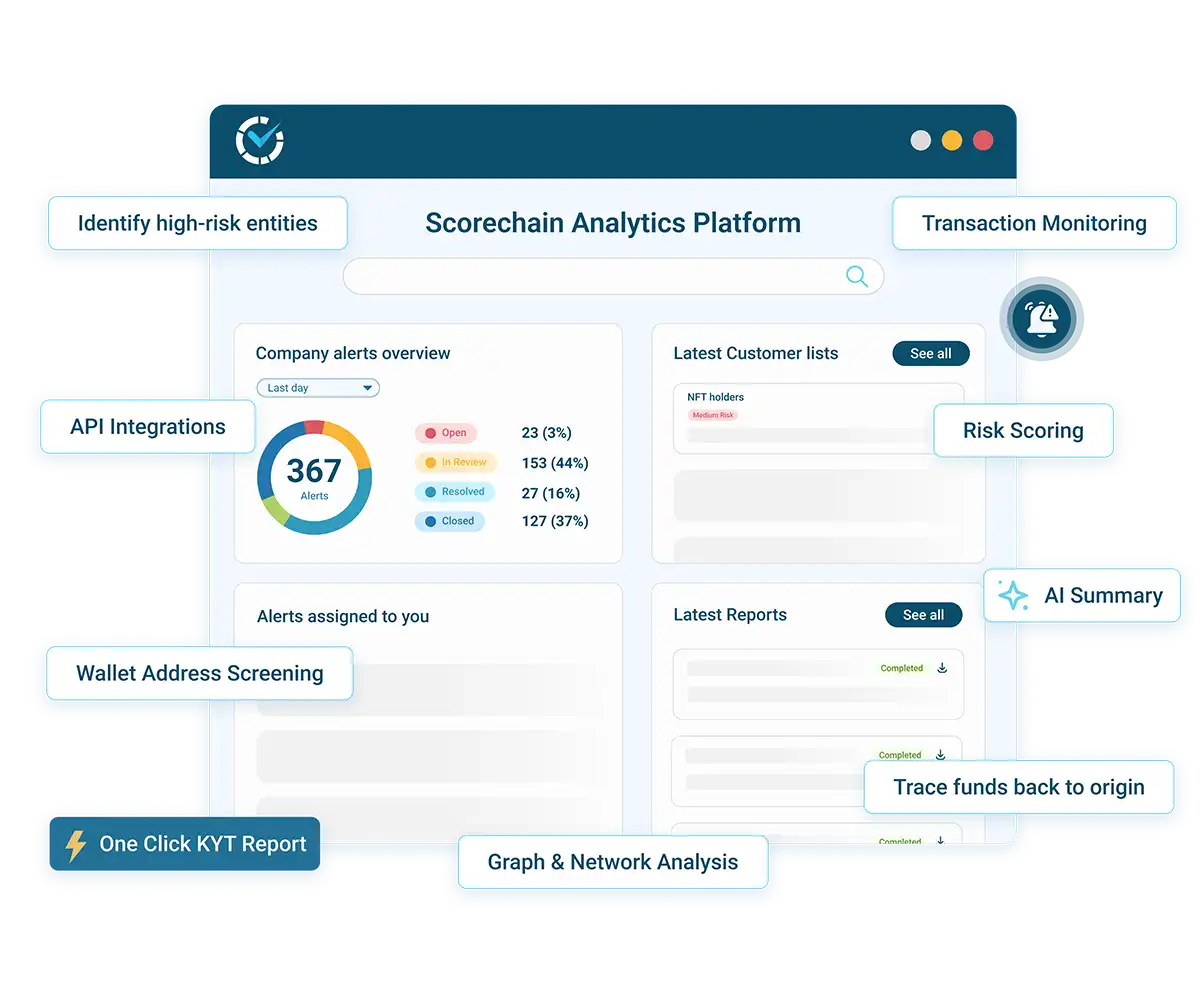
Scorechain is a leading blockchain analytics and crypto AML compliance platform with deep support for major Proof of Work blockchains including Bitcoin, Litecoin, Bitcoin Cash, Dogecoin, and more. With powerful features including real-time transaction monitoring, wallet screening, risk scoring, sanctions detection, and fund flow tracing, Scorechain gives you complete visibility into PoW blockchain activity.
From investigating a suspicious Bitcoin transaction to ensuring full compliance with MiCA, FATF, and Travel Rule requirements, Scorechain equips your team with everything needed to operate confidently in the Proof of Work ecosystem.
Book a Demo with Scorechain and discover how Scorechain can strengthen your Proof of Work compliance programme today.
From wallet screening and KYT monitoring to deep-dive investigations, Scorechain gives you everything you need to stay compliant, secure, and audit-ready.