.png)
Quick overview
This is some text inside of a div block.
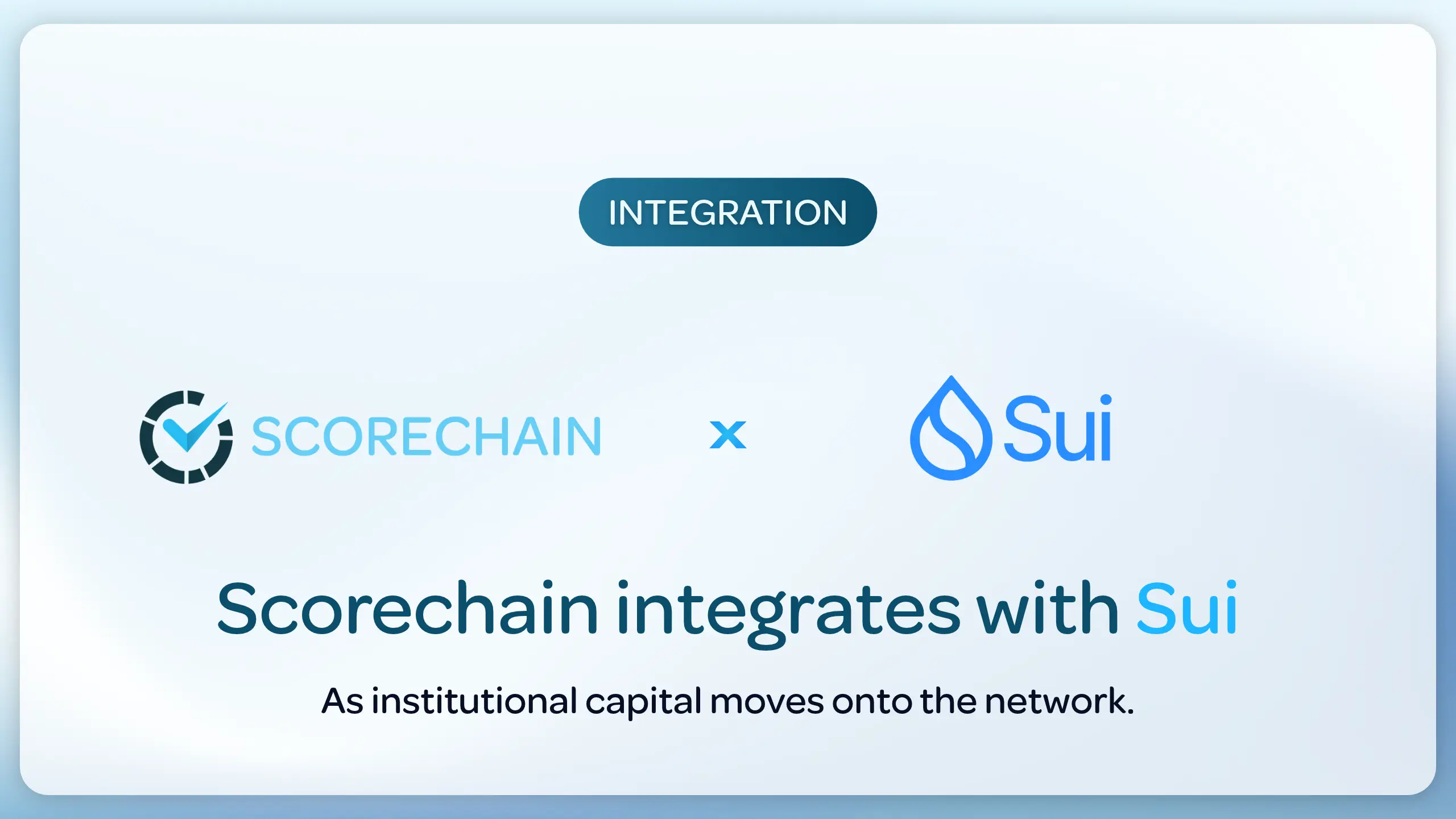
Scorechain today announced the integration of Sui across its Digital Asset Intelligence platform, making Sui the 25th blockchain supported by Scorechain. Compliance teams, investigators and risk analysts can now screen Sui wallets, monitor Sui transactions and trace funds on the network within the same environment they already use for Bitcoin, Ethereum and every other blockchain Scorechain covers.
The integration comes as Sui moves into regulated financial markets. In 2026, the first US spot SUI ETFs began trading and CME Group launched regulated SUI futures, bringing institutional capital onto the network. With more than 35 million daily transactions and a growing stablecoin economy led by USDC, Sui now carries activity that regulated institutions are required to monitor.
For banks, custodians, crypto asset service providers and payment institutions, that growth brings a clear obligation. Every Sui deposit, withdrawal and counterparty must now meet the same AML and sanctions standards as any other digital asset that these institutions handle.
Sui does not follow the UTXO model of Bitcoin or the account model of Ethereum. Instead, assets exist as individual objects with their own ownership and history, and a single transaction can touch dozens of them at once. Transactions reach finality deterministically in under a second, which shortens the window during which a compliance decision has to be made.
Rather than adapting indexing logic designed for other chains, Scorechain built dedicated parsing for Sui objects and Programmable Transaction Blocks. Every movement of value is attributed, scored and traceable to the same standard analysts expect on any other network.
Applying different methods to different blockchains creates friction in monitoring, alerting and regulatory reporting. With Sui integrated, the same analytical standards, alert logic and investigative processes apply across object-based, account-based and UTXO chains.
Compliance teams can screen any Sui address against Scorechain’s database of more than one million labelled entities, covering exchanges and other VASPs, DeFi protocols, bridges, sanctioned parties and known illicit actors. Each screening returns entity attribution and an auditable risk score, so teams can make and document a decision at customer onboarding before accepting a deposit or before releasing a withdrawal.
Transaction Monitoring now covers Sui deposits and withdrawals in near real time. Teams can apply the same risk rules, exposure thresholds and alerting logic they use on other supported chains, so Sui activity flows into existing review queues and reporting without a separate process or a second set of policies.
Investigators can follow funds through Sui’s object-centric transactions using Flux Analysis and the Exploration tool. Programmable Transaction Blocks, which can combine several transfers, swaps and contract calls in a single operation, are broken down into individual movements of value so analysts can see where funds originated, which protocols and counterparties they passed through, and where they ended up. Direct and indirect exposure to high-risk entities is traced across hops rather than stopping at the first counterparty.
Token and Stablecoin Monitoring extends to Sui, covering SUI, supported Sui-native tokens and stablecoins issued on the network, including USDC. Teams can track how stablecoin value moves between wallets, DeFi protocols, bridges and exchanges, and identify concentrations or flows that require further review.
Sanctions screening applies OFAC and other international sanctions lists to Sui counterparties within existing compliance workflows, giving teams consistent sanctions coverage across every chain they monitor.
For institutions that integrate compliance checks into their own systems, Sui is also available through the Blockchain Analytics API, so screening and risk scoring can run automatically inside onboarding, payment and withdrawal flows.
“Institutional engagement with Sui has reached a level where compliance coverage is a prerequisite, not an option. Regulated products are now built on the network, and the institutions we serve expect the same standard of risk assessment and investigative capability they apply to every other digital asset. By integrating Sui across our Digital Asset Intelligence platform, we are providing that assurance from the outset.”
Pierre Gérard, CEO and Co-Founder, Scorechain
Sui is now fully operational within Scorechain for all customers, with no additional setup required. Teams can begin by screening a Sui address or transaction, or by adding Sui to existing monitoring and investigation workflows. Institutions new to Scorechain can request a demo.
Founded in 2015 and headquartered in Luxembourg, Scorechain is a Digital Asset Intelligence company. Its blockchain analytics and AML compliance solutions are used by more than 350 compliance teams across 50+ countries, including banks, crypto asset service providers, payment institutions and law enforcement agencies. Scorechain is ISO/IEC 27001:2022 certified.
Sui, where money moves as freely as messages, is a next-generation Layer 1 blockchain built for onchain finance and agentic infrastructure. Founded by the core team behind Meta’s stablecoin initiative and powered by an object-centric model, Sui makes assets, permissions, and user data programmable and verifiable. Sui’s primitives offer everything necessary to create high-performance finance and AI-native applications. Learn more at sui.io.