Quick overview
This is some text inside of a div block.
.png)
Produced in association with SafeHorizon, the Horizon Europe project on detecting and disrupting crime-as-a-service, in which Scorechain is the blockchain-analytics partner.
A dark web marketplace looks anonymous by design. Buyers and sellers meet over Tor, identities are hidden behind usernames, and payment is made in cryptocurrency rather than through any bank. Yet the biggest marketplaces in history, from Silk Road to AlphaBay to Hydra, were all eventually unravelled, and the thread investigators pulled was almost always the same one, the money. Because every crypto payment is recorded on a public ledger, following the funds turns a supposedly anonymous market into a traceable network of vendors, buyers, and cash-out points.
A dark web marketplace is a commercial website, hosted on anonymising networks such as Tor, where vendors and buyers trade goods and services, frequently illegal ones, using cryptocurrency and pseudonymous accounts. It works like a conventional e-commerce platform, with listings, vendor ratings, escrow, and dispute resolution, but its location is hidden and its payments are designed to avoid the traditional banking system.
The model is deliberately hard to police. The site's server address is obscured, the operators are pseudonymous, and payment does not pass through a regulated intermediary that could freeze it. That combination is why darknet markets became the default venue for trading drugs, stolen data, and other illicit goods at scale, and why disrupting one requires a different playbook from taking down an ordinary website.
Dark web marketplaces work by removing every obvious point at which a participant could be identified. Access runs through Tor, which hides the user's location; accounts use pseudonyms rather than real names; and payment is made in cryptocurrency held in market-controlled or escrow wallets rather than through a bank. The marketplace itself takes a commission on each sale, much like a legitimate platform.
A typical transaction has a clear shape. A buyer funds an account with cryptocurrency, most often Bitcoin and increasingly privacy coins such as Monero. The market holds the funds in escrow while the vendor ships the goods. On confirmation, the market releases payment to the vendor, minus a commission, and the vendor later moves the proceeds through mixers, swaps, and cross-chain bridges toward an exchange where they can be cashed out. Every one of those steps except the shipment is a blockchain transaction, and that is precisely where the investigation begins.
Cryptocurrency is often assumed to make a dark web marketplace untraceable, but for most markets it is the opposite, the most traceable part of the operation. The anonymising network hides where a server sits, and a pseudonym hides a name, but the payment leaves a permanent, public, and timestamped record that no participant can edit or delete. That record is the evidence investigators cannot get from Tor alone.
This is where blockchain forensics comes in. The discipline of blockchain forensics takes those public transactions and reconstructs who paid whom, in what order, and where the money ended up. Privacy coins and mixers raise the difficulty, and some markets have moved to Monero specifically to resist tracing, but the majority of darknet commerce still touches transparent ledgers at some point, above all at the moment funds are converted back into conventional money. The cash-out is the chokepoint, and the blockchain records the path to it.
Blockchain forensics unravels a dark web marketplace by starting from a single known transaction and expanding outward until the whole economy of the market is mapped. Investigators rarely begin with the operator. They begin with one address, a seized wallet, a controlled purchase, or a payment flagged at an exchange, and let the ledger lead them to the rest. The core techniques are:
None of this defeats Tor or breaks encryption. What it does is rebuild the marketplace as a financial network, so that a single vendor payment can expand into the vendor's full wallet, the market's escrow structure, and the exchange accounts where the money surfaced. That reconstruction is what carries a case from suspicion to attribution.
A worked example shows how the thread unwinds. Suppose investigators obtain one deposit address used by a marketplace vendor, perhaps from a controlled purchase. Clustering expands that single address into the vendor's wider wallet, revealing the full run of sales that flowed through it. Tracing those inflows backward leads to the market's escrow wallet, which sits between every buyer and every vendor, and clustering the escrow wallet exposes the market's own commission addresses and the scale of its total throughput.
From there the trail runs forward. Proceeds move through a mixer, across a bridge to another chain, and into deposit addresses at a regulated exchange. That exchange holds know-your-customer records, and a legal request converts the on-chain pseudonym into an off-chain identity. The same method applied across many vendors maps the marketplace's entire economy, its top sellers, its total revenue, and the services it relied on to launder proceeds. This is crypto investigation at the level of a whole ecosystem rather than a single suspect.
The public record of darknet takedowns confirms that following the money, combined with coordinated enforcement, is what dismantles these markets. When Hydra, at the time the world's largest darknet marketplace, was seized in 2022, the operation was a joint action by German and US authorities that included the seizure of the market's cryptocurrency infrastructure, not just its website. Later operations against markets and the mixers that served them followed the same pattern.
Europol's account of one coordinated marketplace operation records 288 dark web vendors arrested and EUR 50.8 million in cash and cryptocurrencies seized across three continents, alongside drugs and firearms. The lesson across these cases is consistent. The marketplace's servers can be hidden and its operators pseudonymous, but the financial layer is shared, recorded, and ultimately traceable, and it is the layer that ties vendors, operators, and launderers into a single case that can be prosecuted.
Privacy-focused tools raise the cost of tracing, but they rarely end an investigation on their own. Mixers pool and redistribute funds to break the visible link between deposit and withdrawal, and privacy coins such as Monero obscure amounts and parties on the ledger itself. Some markets adopted them precisely to frustrate analysis. But funds seldom stay inside a privacy tool forever, and the points where value enters and leaves, the on-ramps and off-ramps, are frequently on transparent chains at regulated services.
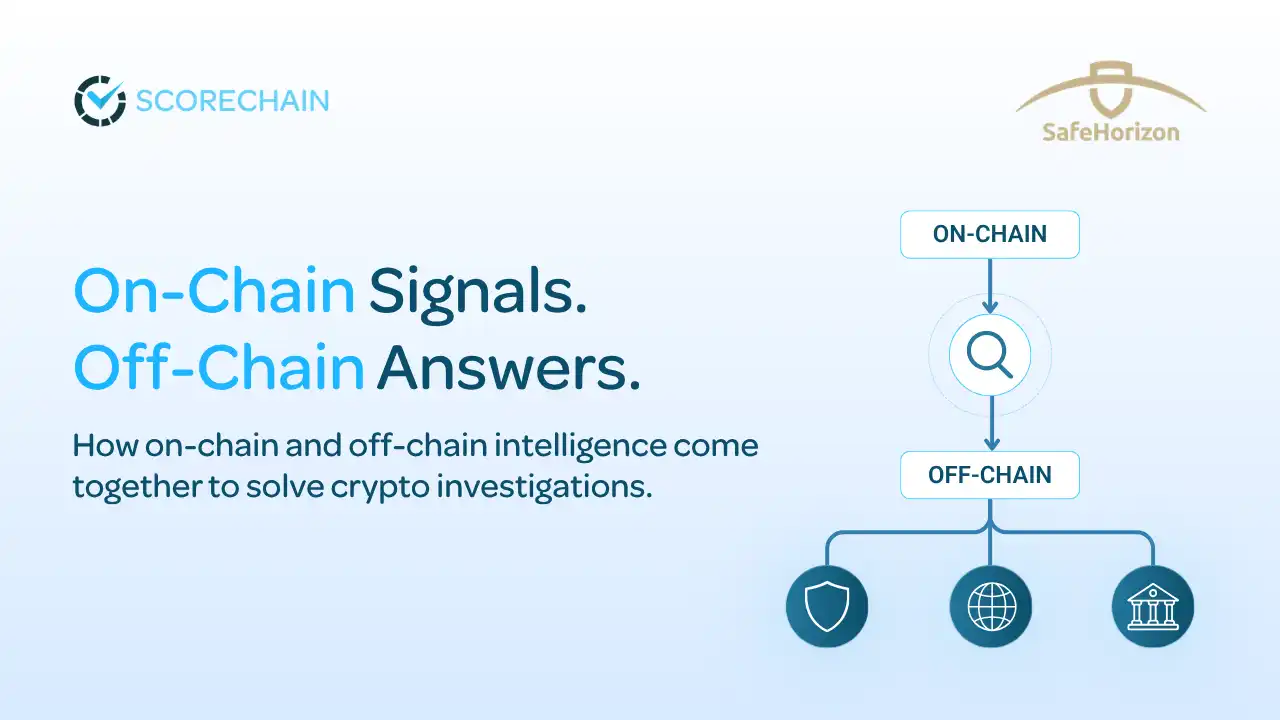
Enforcement has repeatedly reached the operators of laundering infrastructure as well as the markets. Several high-profile mixers used to wash darknet proceeds have themselves been taken down or sanctioned, and their seized records have opened up the very flows they were meant to hide. Blockchain forensics treats a mixer or a privacy coin as a harder segment of the trail, not a wall, and looks for the transparent transaction on either side of it. The discipline of reading both on-chain and off-chain signals together, covered in our guide to multi-source intelligence, is what re-establishes a trail that a mixer was designed to sever.
Scorechain gives investigators and compliance teams the tooling to trace marketplace proceeds and attribute them to real entities in one workflow. Scorechain Investigator follows funds from a single marketplace address across swaps, bridges, decentralised exchanges, and mixers on multiple blockchains, clusters the addresses a vendor or operator controls, and matches them against a database of more than 1 million labelled on-chain entities on Scorechain's Digital Asset Intelligence graph. It takes an analyst from one seized address to a documented map of a market's vendors, escrow structure, and cash-out points.
A transparent, auditable risk score, on a scale of 0 to 100 where a lower score signals higher risk, shows the reasoning behind every rating rather than hiding it in a black box, which matters when a finding has to hold up as evidence. Flux Analysis visualises the fund flows and indirect exposure that tracing surfaces, Wallet Screening checks an address and its counterparties against sanctions lists and known marketplace and mixer infrastructure, and the Blockchain Analytics API feeds that intelligence into an agency's own case-management systems. Coverage spans 25+ blockchains with 2,800+ VASP entries, giving investigators the cross-chain and counterparty reach darknet cases demand. Scorechain is European-native infrastructure, aligned with MiCA and AMLD6 and trusted by 350+ compliance and digital-asset teams.
A dark web marketplace is built to look anonymous. Follow the money on the public ledger, cluster it, and attribute it, and that same market becomes a network of named vendors, quantified revenue, and identifiable cash-out points, which is exactly how the largest ones were brought down.
If your team is building dark web or crypto investigation capability, book a Scorechain demo to see marketplace tracing, wallet clustering, and cross-chain attribution applied to your own cases.
Dark web marketplaces work like e-commerce platforms hidden on anonymising networks such as Tor. Vendors list goods, buyers pay in cryptocurrency held in escrow, and the market takes a commission on each sale. Accounts use pseudonyms and the server location is obscured, but the cryptocurrency payments are recorded permanently on a public blockchain.
Bitcoin has historically been the dominant currency on dark web marketplaces because it is widely available and easy to accept. Many markets have since added or switched to privacy coins such as Monero, which obscure amounts and parties to resist tracing. Bitcoin and other transparent-ledger assets remain common, especially at the points where funds are converted to and from conventional money.
In most cases, yes. Transactions on transparent blockchains such as Bitcoin are permanent and public, so investigators can trace funds from a payment through each hop to a cash-out point and cluster the wallets involved. Privacy coins and mixers make tracing harder, but funds usually touch a transparent chain or a regulated exchange at some stage, which re-opens the trail.
Dark web marketplaces are taken down through coordinated operations that combine blockchain tracing, server and infrastructure seizure, and international law-enforcement cooperation. Investigators follow cryptocurrency flows to attribute vendors and operators and to locate cash-out points, while authorities seize servers and wallets. The largest takedowns, such as Hydra and AlphaBay, were joint actions across multiple countries.
Cryptocurrency seized in a darknet market takedown is taken into custody by the authorities running the operation, documented as evidence, and may later be forfeited and sold under each jurisdiction's asset-recovery rules. Seizures are often substantial, and public records of major operations have reported tens of millions of euros in cash and virtual currencies recovered in a single action.
Operating or trading illegal goods on a dark web marketplace is a crime in most jurisdictions, and it can trigger charges for the underlying offence as well as for money laundering. Accessing the Tor network itself is generally legal, but the commerce that darknet markets are known for, in drugs, stolen data, and other illicit goods, is not. This is general information, not legal advice.