Quick overview
This is some text inside of a div block.
.png)
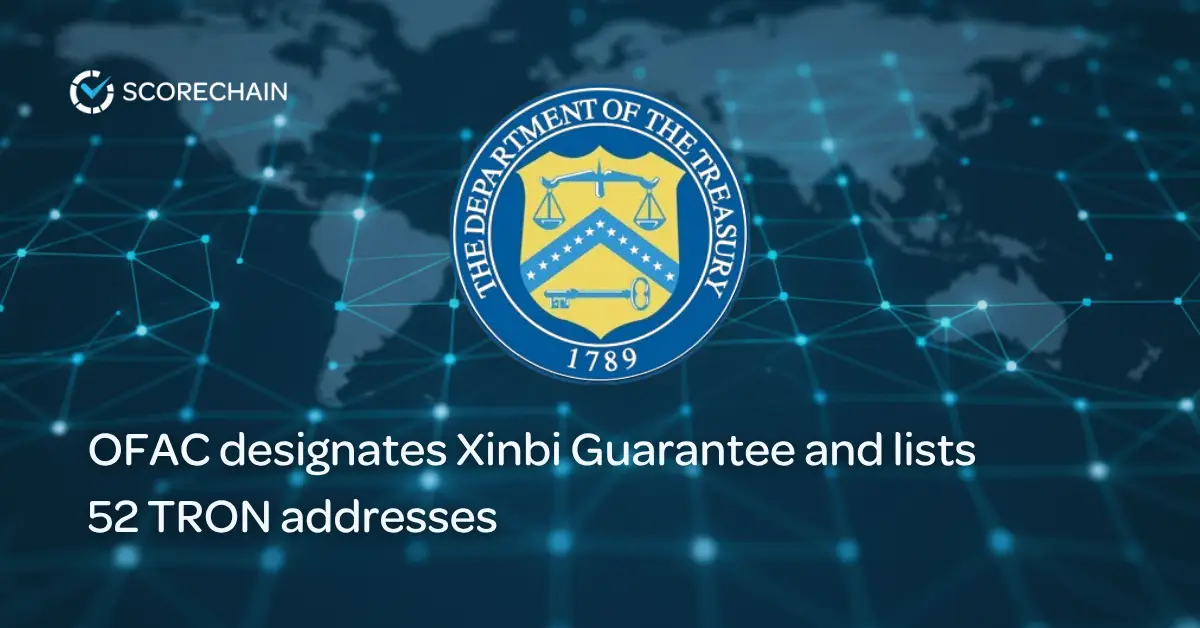
On 30th January, 2026, The U.S. Treasury’s Office of Foreign Assets Control has expanded its sanctions framework to directly target crypto infrastructure linked to Iranian financial networks. The action reflects a broader regulatory shift toward addressing how sanctioned jurisdictions leverage digital asset platforms and blockchain settlement rails to bypass traditional financial controls.
Unlike earlier enforcement actions that focused primarily on individual wallets or operators, this update moves further upstream. By designating exchange-linked infrastructure and associated on-chain addresses, regulators are signaling that sanctions risk in crypto markets is no longer confined to isolated wallet interactions. It increasingly sits at the level of platforms, liquidity routing, and transactional settlement networks.
As part of this action, several TRON-based addresses associated with sanctioned exchange infrastructure were added to the sanctions list. These addresses are now considered blocked property under U.S. regulations and represent high-risk exposure points for institutions handling digital assets:
TCA9vmjsYw9MtPKEwRBtGhKFRfr4CLxJAv
TGsNFrgWfbGN2gX25Wcf8oTejtxtQkvmEx
TASWbk6X1wiTku5TMmMQYqYFvshVEtfJy8
TTS9o5KkpGgH8cK9LofLmMAPYb5zfQvSNa
TCzq6m2zxnQkrZrf8cqYcK6bbXQYAfWYKC
TLvuvpfBKdxddxSsJefeiGCe9eVY8HUroE
TNuA5CQ6LB4jTHoNrjEeQZJmcmhQuHMbQ7
For compliance teams, this update reinforces a reality that has been emerging over the past year. Sanctions enforcement in crypto markets is becoming infrastructure-driven. Stablecoin settlement networks, high-throughput blockchains, and exchange-operated wallets are now part of the enforcement perimeter. Risk exposure increasingly comes from indirect transaction paths, not only from direct interactions with sanctioned wallets.
This creates operational implications for regulated crypto businesses, banks, custodians, payment providers, and fintech platforms. Screening models built solely around static wallet lists are no longer sufficient. Effective sanctions compliance now requires continuous monitoring of transactional relationships, entity attribution, and fund movement patterns across multiple hops.
Scorechain’s monitoring infrastructure is designed to address this shift. The platform continuously integrates sanctions designations into its intelligence layer, allowing compliance teams to identify direct and indirect exposure to sanctioned entities, track transaction propagation across networks, and maintain audit-ready investigation records aligned with regulatory expectations.
From a regulatory perspective, this enforcement action also highlights a broader policy direction. Authorities are no longer treating crypto as a parallel financial ecosystem. Instead, blockchain networks are being actively mapped and regulated as part of the global financial compliance perimeter.
For institutions operating in digital asset markets, this reinforces the importance of maintaining real-time visibility into sanctions risk, settlement flows, and counterparty exposure. As enforcement continues to evolve, the ability to monitor crypto activity at network scale will increasingly define compliance readiness.





















.webp)