Utility Tokens
Utility tokens provide access to platform services, not ownership. Value stems from usage, not profit. Compliance via tools like Scorechain is key to managing AML and regulatory risks.
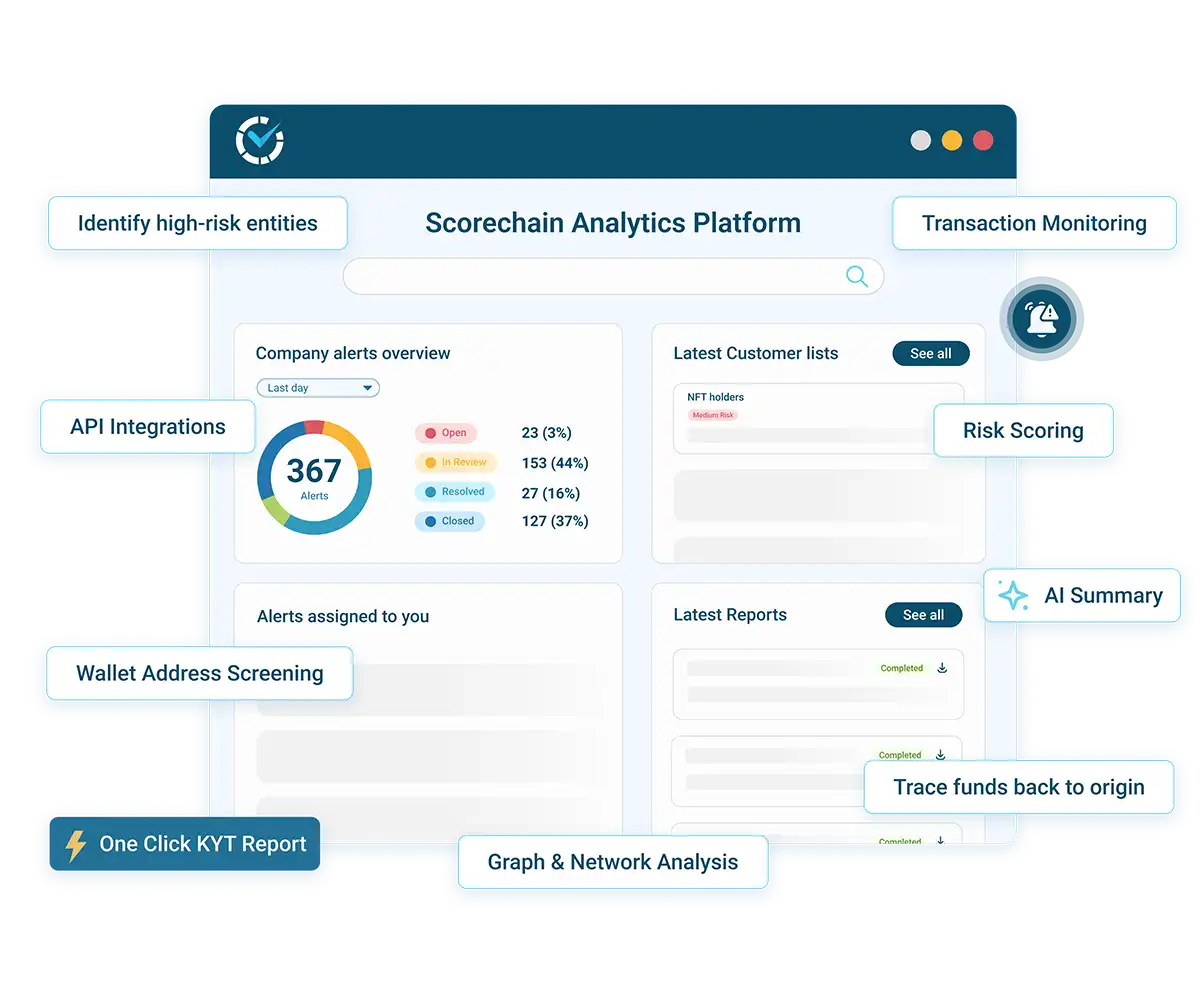
Utility tokens provide access to platform services, not ownership. Value stems from usage, not profit. Compliance via tools like Scorechain is key to managing AML and regulatory risks.














Not every cryptocurrency is designed to be money or an investment. Some tokens exist for a very specific purpose: to give holders access to a product, service, or ecosystem. These are called utility tokens.
A utility token is a digital asset that provides its holder with access to a specific platform, application, or service built on a blockchain. Unlike security tokens that represent ownership or financial returns, utility tokens are designed to be used. They power interactions within a defined ecosystem, whether that means paying for platform fees, unlocking features, accessing content, or participating in network functions.
If security tokens are the crypto equivalent of shares in a company, utility tokens are more like pre-purchased credits or membership passes for a specific service.
Utility tokens are created and distributed by blockchain projects, typically through an Initial Coin Offering (ICO) or Token Generation Event (TGE), as a way to fund development while simultaneously building a user base for their platform.
Once issued, utility tokens serve functional roles within their ecosystem:
The value of a utility token is directly tied to the demand for the service it unlocks. If the platform grows in popularity, demand for the token typically increases alongside it.
Several well-known tokens operate primarily as utility tokens:
Each of these tokens has a defined use case within its own ecosystem rather than representing ownership or financial entitlement.
The distinction between utility tokens and security tokens is one of the most consequential questions in crypto regulation. It determines which legal frameworks apply and what obligations issuers and platforms must meet.
The key differentiator is purpose and expectation:
Regulators including the US SEC apply tests such as the Howey Test to determine whether a token marketed as a utility token is actually functioning as a security. If a token is primarily purchased with an expectation of profit rather than for its intended use, it may be reclassified as a security regardless of how it was labeled at launch.
Utility tokens occupy a complex regulatory space globally. While they are generally subject to lighter regulation than security tokens, they are not regulation-free.
Key regulatory considerations include:
Despite their functional design, utility tokens present real compliance risks that regulated businesses and compliance teams must address:
Any business handling utility tokens, whether as an exchange, a custodian, or a platform accepting them as payment, is subject to the same transaction monitoring and sanctions screening obligations as any other virtual asset service provider.
For exchanges listing utility tokens, platforms accepting them as payment, and custodians holding them on behalf of clients, compliance obligations remain the same regardless of token type.
Scorechain's blockchain analytics platform supports 10,000 plus crypto assets across 21 plus blockchains. Many widely used utility tokens such as BNB, LINK, BAT, and GRT are ERC-20 or BEP-20 standard tokens built on Ethereum and BNB Chain, both of which are supported by Scorechain. For the most accurate and up-to-date information on specific token coverage, it is recommended to check directly with Scorechain or refer to their official documentation.
For tokens that fall within Scorechain's supported networks, compliance teams can access:
Whether you are a crypto business building a utility token ecosystem or a financial institution assessing exposure to utility token markets, Scorechain provides the compliance infrastructure to operate with confidence across supported networks.
Scorechain offers two free ways to screen any wallet address instantly with no credit card required.
Paste any wallet address into the Scorechain AML Bot on Telegram for an instant risk score. For a deeper assessment, Scorechain AI generates a full wallet intelligence report covering entity classification, exposure breakdown, behavioral risk signals, and compliance-ready outputs suited for regulatory decision-making.
Visit scorechain.com to explore the full compliance platform or book a demo to see how Scorechain supports compliance across its supported blockchains and crypto assets.
From wallet screening and KYT monitoring to deep-dive investigations, Scorechain gives you everything you need to stay compliant, secure, and audit-ready.