Proof of Authority (PoA)
Proof of Authority (PoA) is a blockchain consensus mechanism where pre-approved, identity-verified validators confirm transactions, offering high speed and efficiency with lower decentralization.
Proof of Authority (PoA) is a blockchain consensus mechanism where pre-approved, identity-verified validators confirm transactions, offering high speed and efficiency with lower decentralization.
















Not every blockchain needs to be open to the public. In many enterprise and compliance-focused environments, a more controlled approach to transaction validation makes far more sense. That's exactly the problem Proof of Authority (PoA) was designed to solve. Proof of Authority is a consensus mechanism where a fixed set of pre-approved validators are trusted to confirm transactions and produce new blocks. Unlike Proof of Work or Proof of Stake, validators in a PoA network are not chosen by computing power or token holdings. They are selected based on their verified real-world identity and reputation.
If a validator misbehaves, their identity is exposed and their authority is revoked. The stake here isn't financial, it's reputational.
In a PoA network, the process is straightforward. A group of known, vetted validators take turns proposing and confirming new blocks according to a defined schedule or rotation. Because validators are pre-approved and accountable, there's no need for energy-intensive puzzle solving or large token stakes. This makes PoA networks extremely fast and efficient. Transactions are confirmed in seconds, and the network can handle high throughput without congestion or unpredictable fees.
The trade-off is decentralization. PoA networks are inherently more centralized than public blockchains, since block production is controlled by a limited group of known entities. For many use cases, though, that's a deliberate design choice rather than a flaw.
PoA is widely used in private and consortium blockchains where participants already have a trusted relationship. Common examples include:
Banks, logistics companies, healthcare providers, and government agencies building permissioned blockchain systems frequently choose PoA for its speed, predictability and governance clarity.
From a compliance standpoint, PoA has a natural advantage. Since validators are known and identifiable, it's easier to establish accountability within the network. This aligns well with regulatory expectations around KYC (Know Your Customer) and AML (Anti-Money Laundering) obligations.
However, PoA networks are not immune to compliance risk. Transactions on PoA blockchains can still involve high-risk wallets, sanctioned entities, or suspicious fund flows. Just because the validators are trusted doesn't mean every transaction on the network is clean.
Businesses operating on or with PoA blockchains still need to screen wallet addresses, monitor transaction patterns, and maintain audit trails that satisfy regulators under frameworks like FATF guidelines and MiCA.
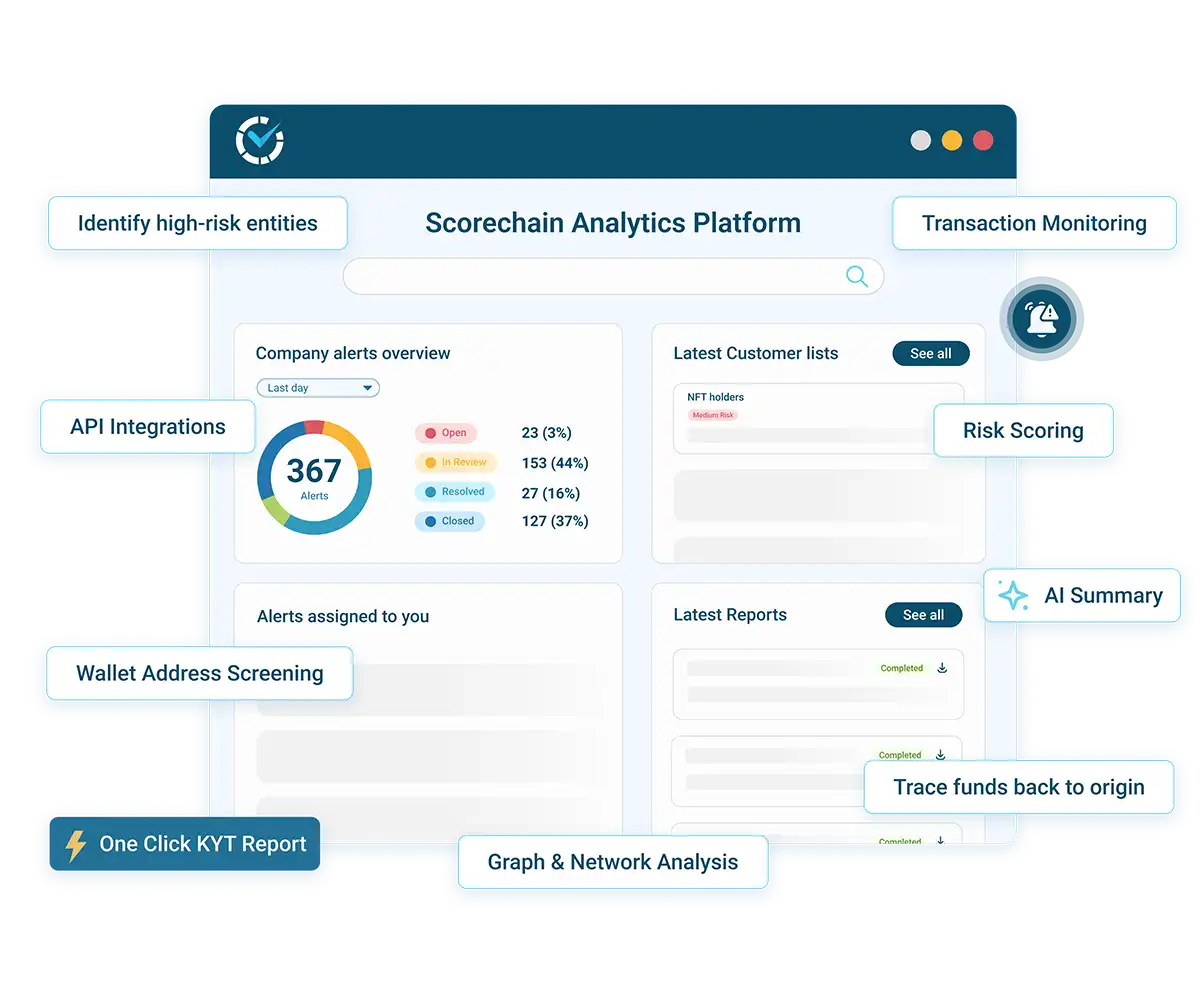
Scorechain's blockchain analytics platform supports compliance monitoring across a wide range of blockchain environments, including networks built on PoA architecture. Whether you're screening wallets, tracing fund flows, or flagging suspicious activity, Scorechain gives compliance teams the visibility they need regardless of the underlying consensus mechanism.
For businesses building on or integrating with PoA networks, having a reliable analytics layer is essential for meeting regulatory obligations and protecting against financial crime.
Explore how Scorechain can support your compliance needs at scorechain.com.
From wallet screening and KYT monitoring to deep-dive investigations, Scorechain gives you everything you need to stay compliant, secure, and audit-ready.