Crypto Transaction Monitoring
Crypto transaction monitoring is the process of analyzing blockchain activity in real time to detect suspicious behavior, assess risk, and ensure compliance with AML and regulatory requirements.
Crypto transaction monitoring is the process of analyzing blockchain activity in real time to detect suspicious behavior, assess risk, and ensure compliance with AML and regulatory requirements.















Every transaction on a blockchain leaves a permanent record. But recording transactions is not the same as understanding them. Crypto transaction monitoring is the process of continuously analyzing blockchain activity to detect suspicious behavior, assess risk, and ensure compliance with financial regulations.
For any business handling digital assets, transaction monitoring is not optional. It is a core regulatory requirement and a frontline defense against financial crime.
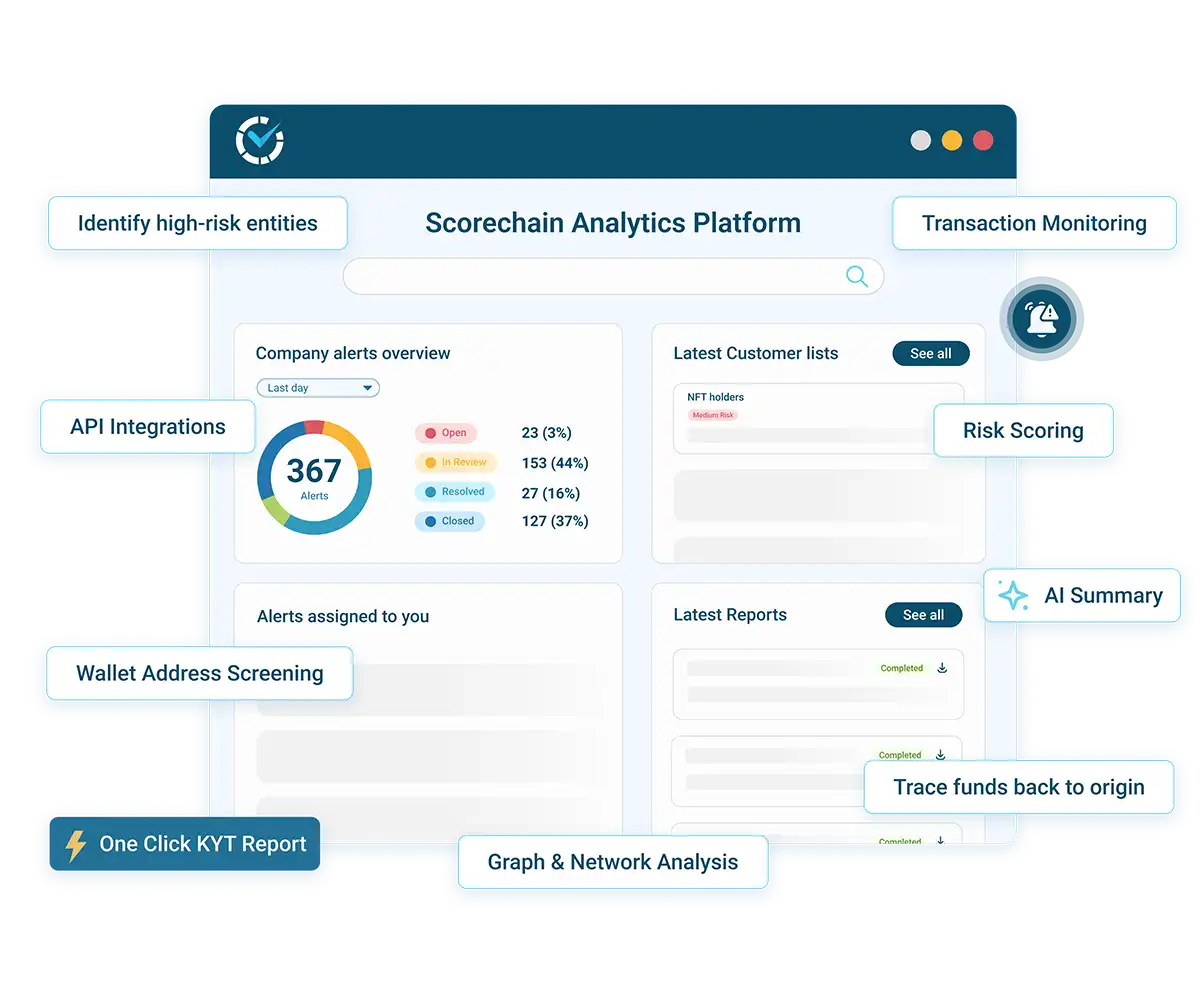
Monitoring systems analyze on-chain transactions in real time against a defined set of rules and risk indicators. When a transaction triggers a flag, compliance teams are alerted to investigate further.
The process typically involves:
Not every large transaction is suspicious, and not every suspicious transaction is large. Effective monitoring looks beyond volume to identify behavioral patterns such as:
Crypto transaction monitoring operates at two levels:
A complete compliance programme requires both. On-chain monitoring catches blockchain-level risk while off-chain monitoring catches platform-level behavioral red flags that may not be visible on the blockchain itself.
Scorechain's transaction monitoring solution is built specifically for the demands of crypto compliance. With real-time alerts, customizable risk rules, automated wallet screening, and risk scoring across 21 plus blockchains and 10,000 plus crypto assets, Scorechain gives compliance teams the visibility and speed they need to stay ahead of financial crime.
Whether you are running an exchange, a custodian, a payment platform, or a DeFi service, Scorechain helps you monitor every transaction with precision and meet your regulatory obligations without friction. Visit scorechain.com to learn more, or book a demo to see how Scorechain's transaction monitoring works in practice.
From wallet screening and KYT monitoring to deep-dive investigations, Scorechain gives you everything you need to stay compliant, secure, and audit-ready.