Crypto Screening
Crypto screening evaluates wallets, transactions, and counterparties against sanctions, risk data, and on-chain behavior to detect illicit activity and ensure AML compliance.
Crypto screening evaluates wallets, transactions, and counterparties against sanctions, risk data, and on-chain behavior to detect illicit activity and ensure AML compliance.














Every crypto transaction carries a risk profile. Before funds move, before a customer is onboarded, and before a counterparty relationship is established, compliance teams need to know what they are dealing with.
Crypto screening is the process of evaluating cryptocurrency wallets, addresses, and transactions against risk intelligence databases, sanctions lists, and on-chain behavioral data to determine whether they pose a compliance risk. It is the first line of defense against financial crime in the crypto industry and a direct regulatory requirement for any business handling digital assets.
Crypto screening is not a single check. It is a continuous, multi-layered process that runs across the entire customer and transaction lifecycle.
A comprehensive crypto screening programme operates across several dimensions:
Evaluating individual wallet addresses against sanctions lists, known illicit entity databases, and on-chain risk intelligence to determine their risk profile before any transaction is processed.
Analyzing individual transactions in real time to detect suspicious patterns, sanctions exposure, and connections to high-risk entities at the point of transfer.
Assessing the risk profile of the entity or wallet on the other side of a transaction, including exchanges, custodians, DeFi protocols, and individual users.
Evaluating the compliance posture and risk profile of Virtual Asset Service Providers before entering into business relationships or processing transfers that involve them.
Specifically checking wallet addresses and transaction counterparties against live global sanctions lists including OFAC, EU, UN, and HMT designations, covering both direct listings and indirect exposure.
Effective screening examines multiple risk signals simultaneously:
Regulators treat crypto screening as a baseline compliance obligation. Key frameworks driving this requirement include:
Failure to implement adequate screening has already resulted in multi-million dollar fines and license revocations for crypto businesses globally.
Screening should be embedded across every critical touchpoint of the compliance workflow:
Scorechain is a purpose-built blockchain analytics and crypto AML compliance platform that has been powering crypto screening for regulated businesses since 2015. Trusted by 350 plus compliance teams across 45 countries, Scorechain provides a complete screening solution across every major blockchain network.
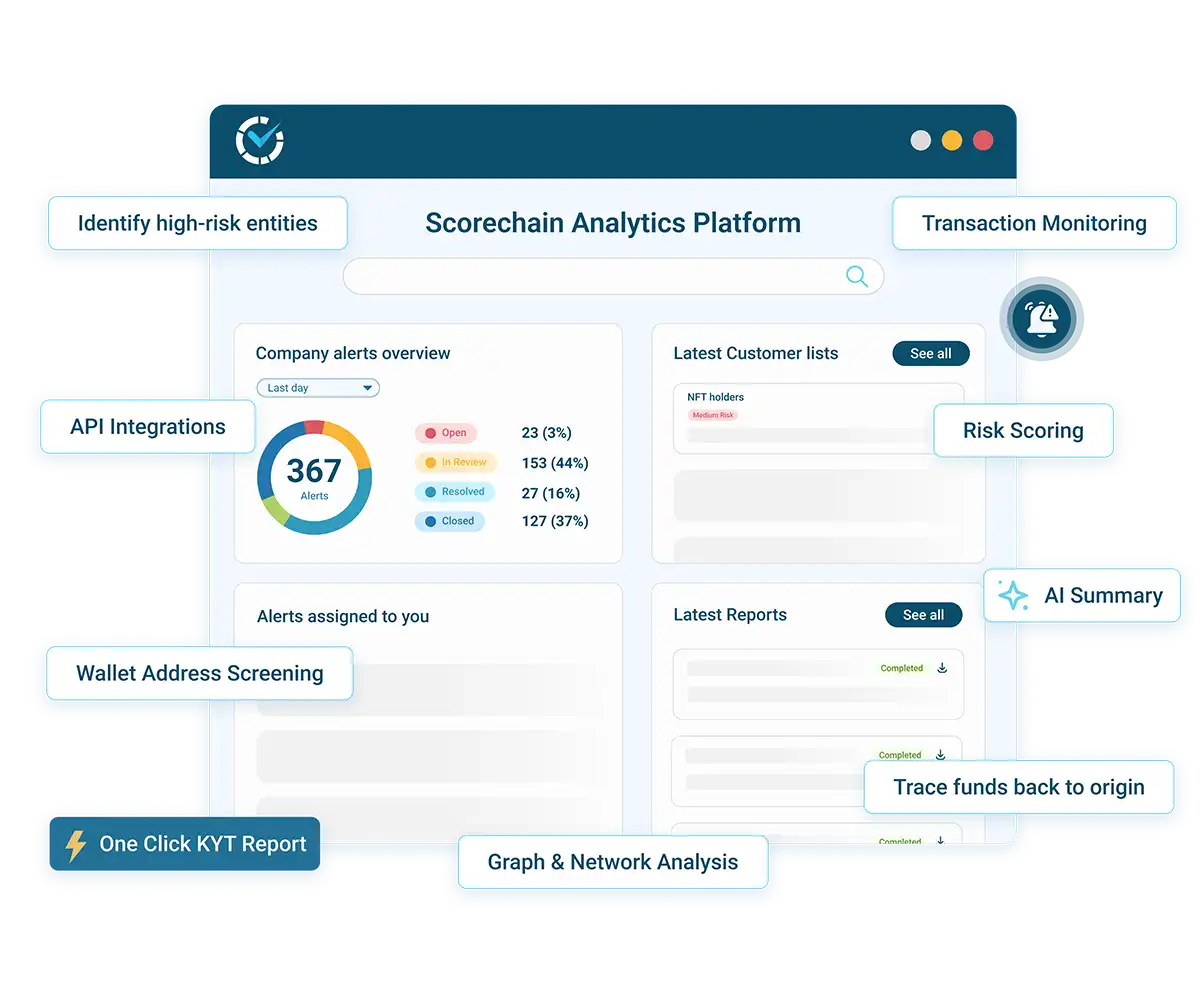
Scorechain's Wallet and Transaction Screening platform delivers instant, address-level risk assessment against live OFAC, EU, UN, and HMT databases. Every screening result includes direct and indirect exposure analysis, entity classification, behavioral risk scoring, and audit-ready documentation across 21 plus blockchains and 10,000 plus crypto assets.
Scorechain's Transaction Monitoring solution delivers real-time, scenario-based screening across multiple blockchains simultaneously. Customizable alert rules and risk thresholds allow compliance teams to configure screening parameters that match their specific regulatory environment and risk appetite.
The VASP Risk Assessment tool provides detailed risk profiles for 1,000 plus VASPs, CEFIs, and DeFi platforms, enabling businesses to screen counterparty service providers before establishing relationships or processing inter-VASP transfers.
Scorechain's Stablecoin Transaction Monitoring provides dedicated screening for USDT, USDC, EURC, and other major stablecoins, addressing the unique compliance demands of stablecoin-denominated transactions for banks, fintechs, and payment platforms.
For high-risk or high-value transactions requiring deeper fund origin verification, Scorechain's Source of Funds service combines automated on-chain screening with expert analyst review to produce audit-ready assessments that meet regulatory and legal standards.
Scorechain's Developer API exposes all core screening capabilities through a unified interface, allowing businesses to embed wallet screening, transaction monitoring, and risk scoring directly into their onboarding flows, transaction processing systems, and case management platforms.
Scorechain makes it easy to run your first screening check at no cost and with no credit card required.
Paste any wallet address into the Scorechain AML Bot on Telegram for an instant risk score delivered in seconds. For a more comprehensive assessment, Scorechain AI generates a full wallet intelligence report covering entity classification, direct and indirect exposure breakdown, behavioral risk signals, and compliance-ready outputs built for regulatory decision-making.
Both are completely free to try, giving compliance teams immediate access to the depth and accuracy of Scorechain's screening intelligence before committing to a full platform deployment.
Visit scorechain.com to explore the full crypto screening platform, or book a demo to see how Scorechain's screening tools integrate into your compliance workflow.
From wallet screening and KYT monitoring to deep-dive investigations, Scorechain gives you everything you need to stay compliant, secure, and audit-ready.