Crypto Node
Crypto nodes are decentralized computers that store, validate, and broadcast blockchain data. Different types handle specific tasks, impacting network security and compliance tracking.
Crypto nodes are decentralized computers that store, validate, and broadcast blockchain data. Different types handle specific tasks, impacting network security and compliance tracking.















Every blockchain network needs participants to keep it running. No central server, no single company, and no governing authority maintains the ledger. Instead, the network is sustained by a distributed infrastructure of computers known as nodes.
A crypto node is a computer or device that participates in a blockchain network by storing a copy of the blockchain, validating transactions, and communicating with other nodes across the network. Nodes are the backbone of decentralization. Without them, a blockchain cannot function.
Nodes perform several critical functions depending on their type and configuration:
The more nodes a network has, the more decentralized, resilient, and censorship-resistant it becomes.
Not all nodes are the same. Different node types serve different roles within a blockchain network:
Full nodes download and store the complete history of a blockchain from the very first block to the present. They independently verify every transaction and block against the network's consensus rules without relying on any third party.
Full nodes are the gold standard for trustless participation in a blockchain network. Bitcoin and Ethereum both rely heavily on a global network of full nodes to maintain their integrity.
Also called SPV (Simplified Payment Verification) nodes, light nodes do not download the full blockchain. Instead they download only block headers and rely on full nodes to verify transaction details. They are faster and require significantly less storage, making them suitable for mobile wallets and applications where full node operation is impractical.
On Proof of Work blockchains, mining nodes compete to solve cryptographic puzzles and propose new blocks. They are full nodes with additional mining software and hardware attached. On Bitcoin, mining nodes run specialized ASIC hardware to maximize their chances of earning block rewards.
On Proof of Stake blockchains, validator nodes are responsible for proposing and attesting to new blocks. Validators must stake a defined amount of cryptocurrency as collateral. On Ethereum, for example, a minimum of 32 ETH is required to run a validator node.
Archive nodes store the complete blockchain history including all historical state data, not just the current state. They are used by blockchain explorers, analytics platforms, and researchers who need access to historical on-chain data going back to the genesis block.
Used by certain blockchain networks such as Dash, masternodes perform specialized functions beyond basic transaction validation, including instant transaction processing, privacy features, and governance voting. They typically require a significant collateral stake to operate.
Anyone with the right hardware, internet connection, and technical knowledge can run a crypto node. Requirements vary significantly by network:
Running a node contributes directly to network decentralization and security. It also allows operators to interact with the blockchain without relying on third-party services, which is important for privacy and trustless verification.
From a compliance perspective, nodes play an increasingly important role in how blockchain data is accessed, monitored, and analyzed.
Key compliance considerations around crypto nodes include:
As regulatory frameworks like FATF guidelines and MiCA continue to evolve, the role of node operators in broader crypto compliance infrastructure is receiving growing regulatory attention.
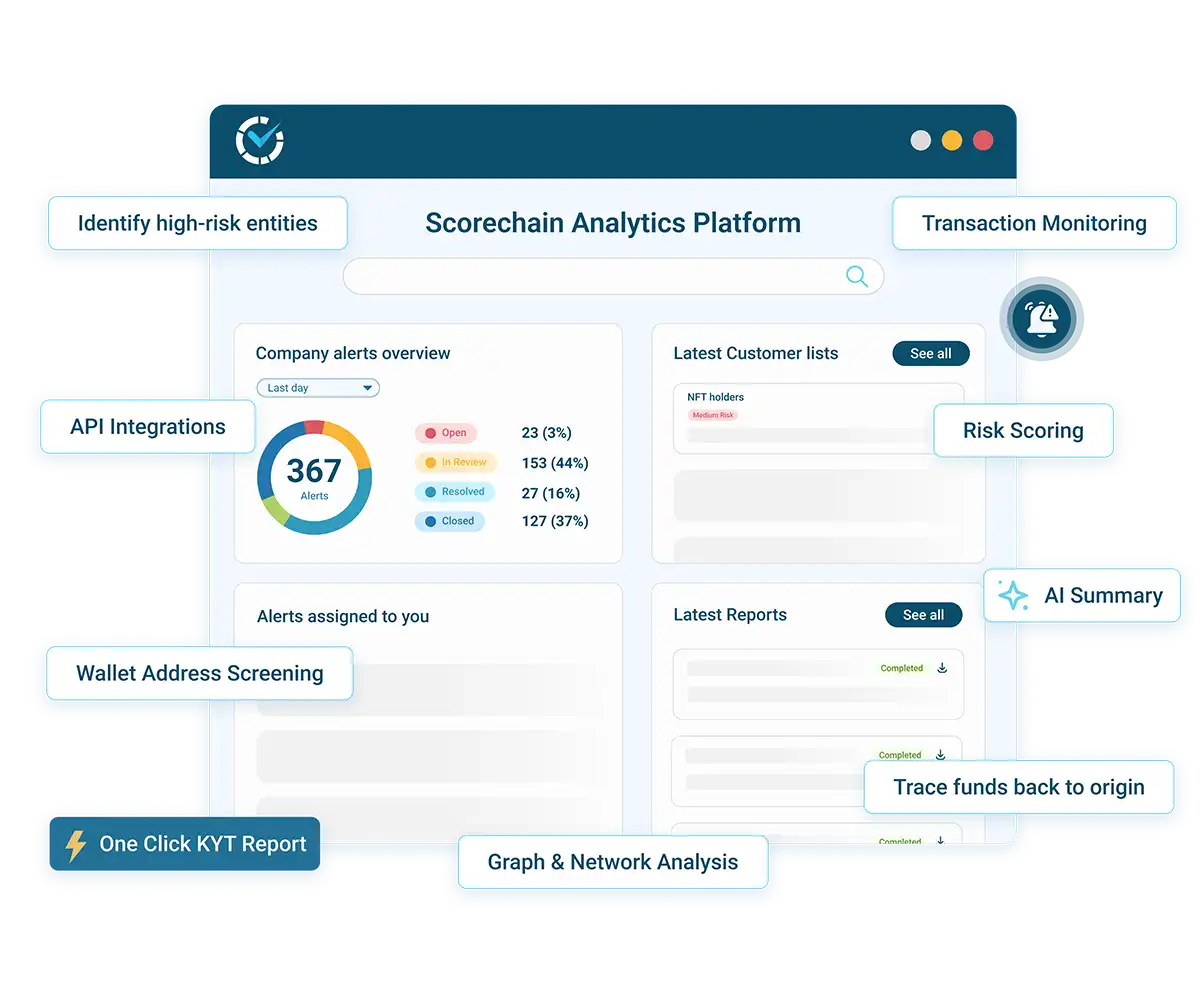
Blockchain analytics platforms like Scorechain rely on access to node-level blockchain data to power their compliance tools. The accuracy, depth, and real-time nature of node data directly determines the quality of wallet screening, transaction monitoring, and risk intelligence that compliance teams can access.
Scorechain's Transaction Monitoring solution processes on-chain transaction data across supported blockchain networks to deliver real-time surveillance with customizable alert rules. Wallet and Transaction Screening draws on deep blockchain data to assess the complete history and risk profile of any wallet address. Flux Analysis uses granular on-chain data to map fund flows visually across wallets and entities.
For crypto businesses, financial institutions and law enforcement agencies that depend on accurate blockchain data for compliance decisions, Scorechain's platform translates raw node-level data into actionable compliance intelligence across 21 plus blockchains.
Scorechain offers two free ways to screen any wallet address with no credit card required.
Paste any address into the Scorechain AML Bot on Telegram for an instant risk score. For a deeper assessment, Scorechain AI generates a comprehensive wallet intelligence report covering entity classification, exposure breakdown, behavioral risk signals, and compliance-ready outputs built for regulatory decision-making.
Visit scorechain.com to explore the full compliance platform, or book a demo to see how Scorechain translates blockchain node data into real-world compliance intelligence.
From wallet screening and KYT monitoring to deep-dive investigations, Scorechain gives you everything you need to stay compliant, secure, and audit-ready.