Crypto Halving
Crypto halving is a pre-programmed event that cuts block mining rewards in half, creating scarcity. It increases market volatility and creates transaction spikes for compliance teams.
Crypto halving is a pre-programmed event that cuts block mining rewards in half, creating scarcity. It increases market volatility and creates transaction spikes for compliance teams.

















Every blockchain network built on Proof of Work has a built-in mechanism to control the supply of its cryptocurrency. For Bitcoin and several other networks, that mechanism is called a halving.
A crypto halving is a pre-programmed event in which the reward given to miners for successfully adding a new block to the blockchain is cut in half. It happens automatically at fixed intervals, is written directly into the protocol code, and cannot be changed or overridden by any individual, company, or government.
Halvings are one of the most significant and closely watched events in the crypto calendar, with direct implications for miners, investors, exchanges, and the broader market.
When Satoshi Nakamoto designed Bitcoin, a deliberate decision was made to limit the total supply to 21 million BTC. To control how quickly those coins enter circulation, the block reward given to miners is programmed to halve at regular intervals.
On Bitcoin, a halving occurs every 210,000 blocks, which translates to approximately every four years based on Bitcoin's target block time of 10 minutes.
The history of Bitcoin halvings:
This process will continue until all 21 million Bitcoin have been mined, estimated to occur around the year 2140. After that point, miners will earn only transaction fees as compensation for securing the network.
The halving mechanism serves a fundamental economic purpose. By reducing the rate at which new Bitcoin enters circulation, it creates a programmatic form of scarcity. The core principle is simple: if demand remains constant or increases while supply growth slows, upward price pressure follows.
Historically, Bitcoin halvings have preceded significant bull market cycles, though past performance is not a guarantee of future results and many other factors influence price movements.
Beyond price, halvings have structural implications for the entire Bitcoin ecosystem:
Bitcoin is not the only cryptocurrency with a halving mechanism. Several other Proof of Work networks have implemented similar supply control schedules:
The period surrounding a Bitcoin halving typically generates significant market activity as traders, investors, and institutions position themselves in anticipation of the supply reduction. Key market dynamics associated with halvings include:
Halving events create specific compliance challenges for exchanges, custodians, and financial institutions operating in the crypto space:
Under FATF guidelines and MiCA, the obligation to monitor, screen, and report suspicious activity does not reduce during periods of high market activity. If anything, compliance teams need to be more vigilant during volatile market conditions.
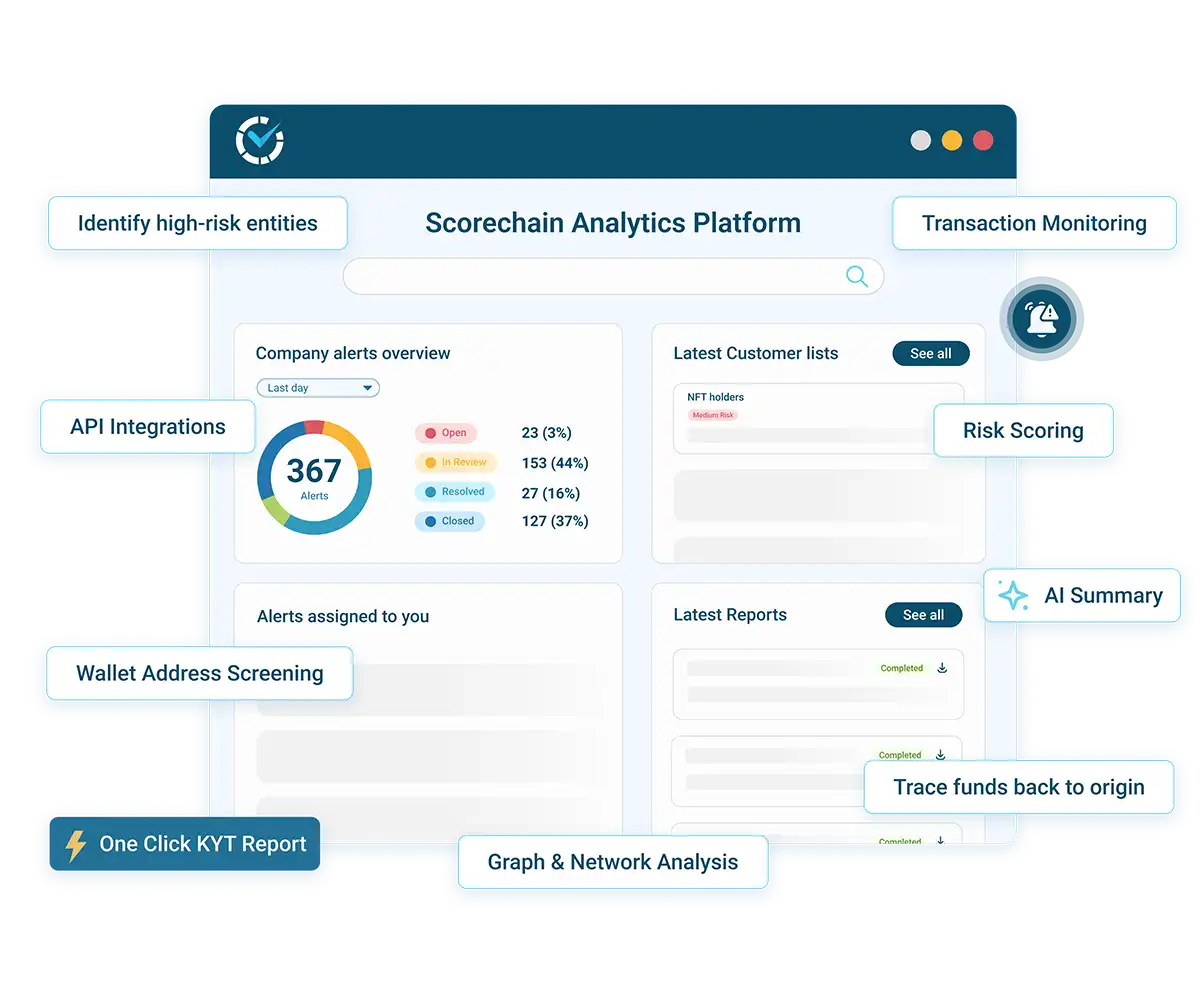
Halving events bring increased transaction volumes, heightened market activity, and greater compliance pressure. Scorechain's blockchain analytics platform is built to handle compliance demands at scale, regardless of market conditions.
Scorechain's Transaction Monitoring solution processes on-chain transactions in real time with customizable alert rules, ensuring that spikes in trading volume during halving periods do not create gaps in surveillance coverage. Wallet and Transaction Screening delivers instant risk assessments for every new deposit and withdrawal, keeping pace with increased transaction flows without compromising accuracy.
For exchanges managing surges in miner deposits following a halving, Flux Analysis provides clear visual mapping of fund flows from mining wallet addresses to exchange accounts, supporting source of funds verification for mining revenue. The Source of Funds service provides audit-ready assessments for high-value mining deposits that require enhanced due diligence documentation.
For crypto businesses and financial institutions managing compliance through halving cycles, Scorechain provides the infrastructure to maintain regulatory standards even when market conditions demand it most.
Scorechain offers two free ways to screen any wallet address with no credit card required.
Paste any address into the Scorechain AML Bot on Telegram for an instant risk score. For a deeper assessment, Scorechain AI generates a comprehensive wallet intelligence report covering entity classification, exposure breakdown, behavioral risk signals, and compliance-ready outputs built for regulatory decision-making.
Visit scorechain.com to explore the full compliance platform, or book a demo to see how Scorechain maintains compliance standards across high-volume market events like crypto halvings.
From wallet screening and KYT monitoring to deep-dive investigations, Scorechain gives you everything you need to stay compliant, secure, and audit-ready.