Crypto Exchange Regulation
Crypto exchange regulation refers to the laws and compliance requirements that govern how crypto exchanges operate, ensuring they prevent fraud, money laundering, and illegal activities.
Crypto exchange regulation refers to the laws and compliance requirements that govern how crypto exchanges operate, ensuring they prevent fraud, money laundering, and illegal activities.
















Crypto exchanges are the gateway between traditional finance and digital assets. As their role in global financial markets has grown, so has regulatory scrutiny. Crypto exchange regulation refers to the legal frameworks, licensing requirements, and compliance obligations that govern how cryptocurrency exchanges operate across different jurisdictions.
The core goal is straightforward: ensure exchanges cannot be used for money laundering, fraud, sanctions evasion, or terrorist financing.
Exchanges handle enormous volumes of value daily. Without oversight, they become attractive channels for financial crime. Regulators treat crypto exchanges similarly to traditional financial institutions, requiring them to:
Regulation varies significantly by country, but several frameworks set the global standard:
Most regulated jurisdictions now require exchanges to obtain a license or registration before operating. Requirements typically include:
Operating without a license in regulated markets carries serious consequences including heavy fines, operational shutdowns, and criminal liability.
One of the most operationally significant compliance requirements for exchanges is the Travel Rule. Originating from FATF Recommendation 16, it requires exchanges to collect and share information about the sender and receiver of crypto transfers above a defined threshold.
This means exchanges must know not just their own customers but also gather information about counterparty VASPs (Virtual Asset Service Providers) on the receiving end. Implementing Travel Rule compliance requires dedicated technology and cross-platform coordination.
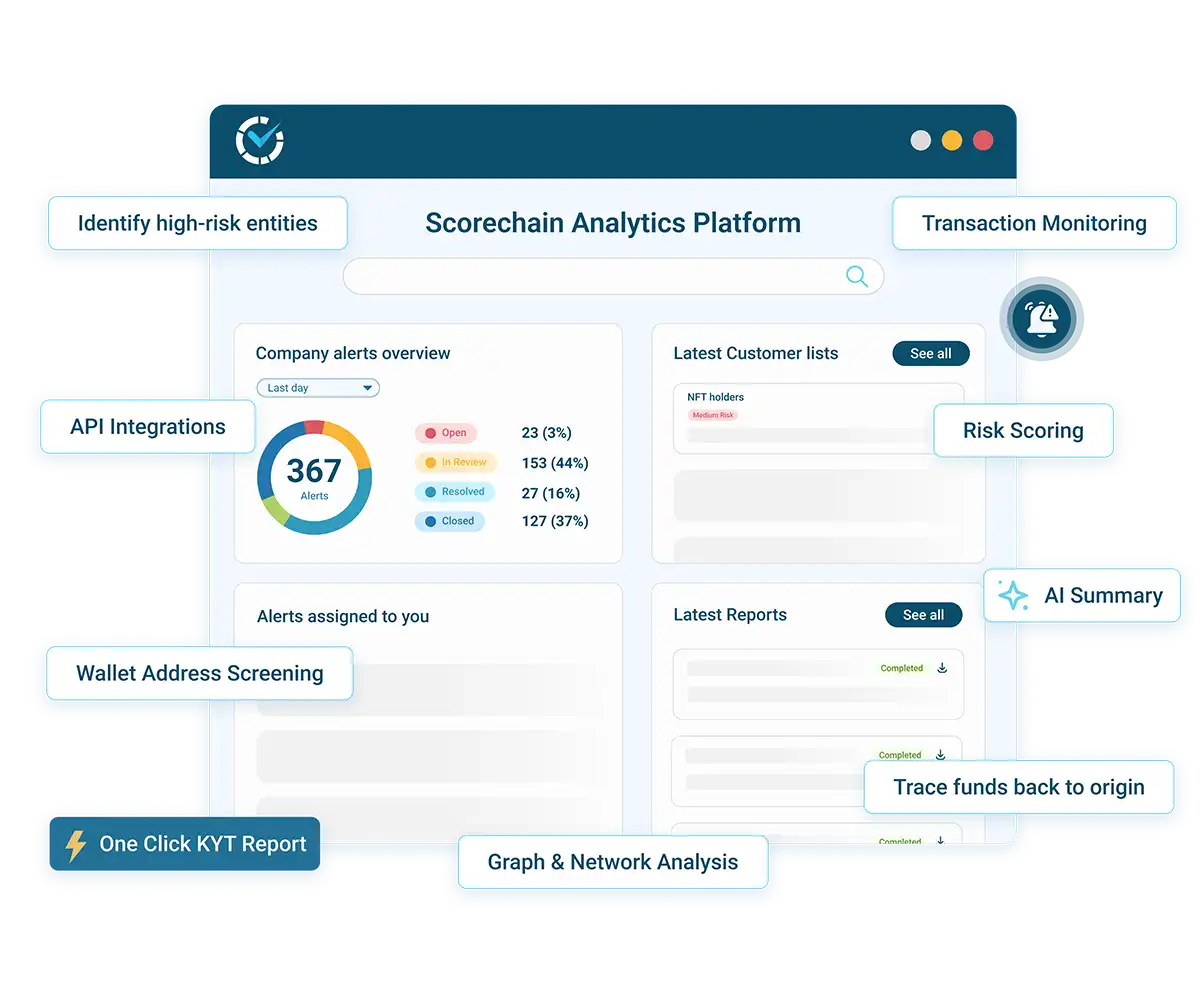
Meeting regulatory obligations at scale requires more than internal policies. It requires reliable technology that can screen wallets, monitor transactions in real time, detect risk, and generate audit-ready reports automatically.
Scorechain's blockchain analytics platform is purpose-built for regulated exchanges, offering wallet screening, transaction monitoring, risk scoring, and sanctions detection across 21 plus blockchains and 10,000 plus crypto assets. Whether you are managing Travel Rule compliance or responding to a regulatory inquiry, Scorechain gives your compliance team the tools to act with confidence.
Explore how Scorechain supports exchange compliance at scorechain.com, or book a demo to see the platform firsthand.
From wallet screening and KYT monitoring to deep-dive investigations, Scorechain gives you everything you need to stay compliant, secure, and audit-ready.