Crypto Exchange
Crypto exchange is a platform to buy, sell, and trade digital assets, with CEX and DEX models, while meeting KYC, AML, and global regulatory compliance using tools like Scorechain.
Crypto exchange is a platform to buy, sell, and trade digital assets, with CEX and DEX models, while meeting KYC, AML, and global regulatory compliance using tools like Scorechain.














Buying, selling, and trading cryptocurrency requires a marketplace. That marketplace is a crypto exchange.
A crypto exchange is a platform that enables users to buy, sell, and trade digital assets. It connects buyers and sellers, provides pricing based on market activity, and facilitates the settlement of transactions. For most people, a crypto exchange is the first and primary point of contact with the crypto ecosystem.
Centralized exchanges are operated by a company that acts as an intermediary between buyers and sellers. Users create accounts, complete KYC verification, and trust the platform to hold and manage their funds. Popular examples include Binance, Coinbase, Kraken, and OKX.
Key characteristics:
Decentralized exchanges operate without a central authority. Trades happen directly between users through smart contracts on the blockchain. No account registration or KYC is required in most cases. Popular examples include Uniswap, PancakeSwap, and dYdX.
Key characteristics:
Hybrid exchanges combine elements of both CEX and DEX, offering centralized liquidity with decentralized custody and settlement. They aim to deliver the best of both models.
The core function of any exchange is matching buyers with sellers at an agreed price. This happens through an order book or an automated market maker (AMM) model.
Once a trade is matched, settlement occurs either internally within the exchange's system or directly on-chain depending on the platform type.
Crypto exchanges sit at the center of regulatory attention globally. As primary gateways for fiat-to-crypto and crypto-to-crypto activity, they carry significant compliance responsibilities:
Regulatory frameworks such as FATF guidelines, MiCA in Europe, FinCEN requirements in the United States, and FCA rules in the United Kingdom all place direct obligations on crypto exchanges to operate as responsible financial gatekeepers.
Exchanges face a range of financial crime risks that require constant vigilance:
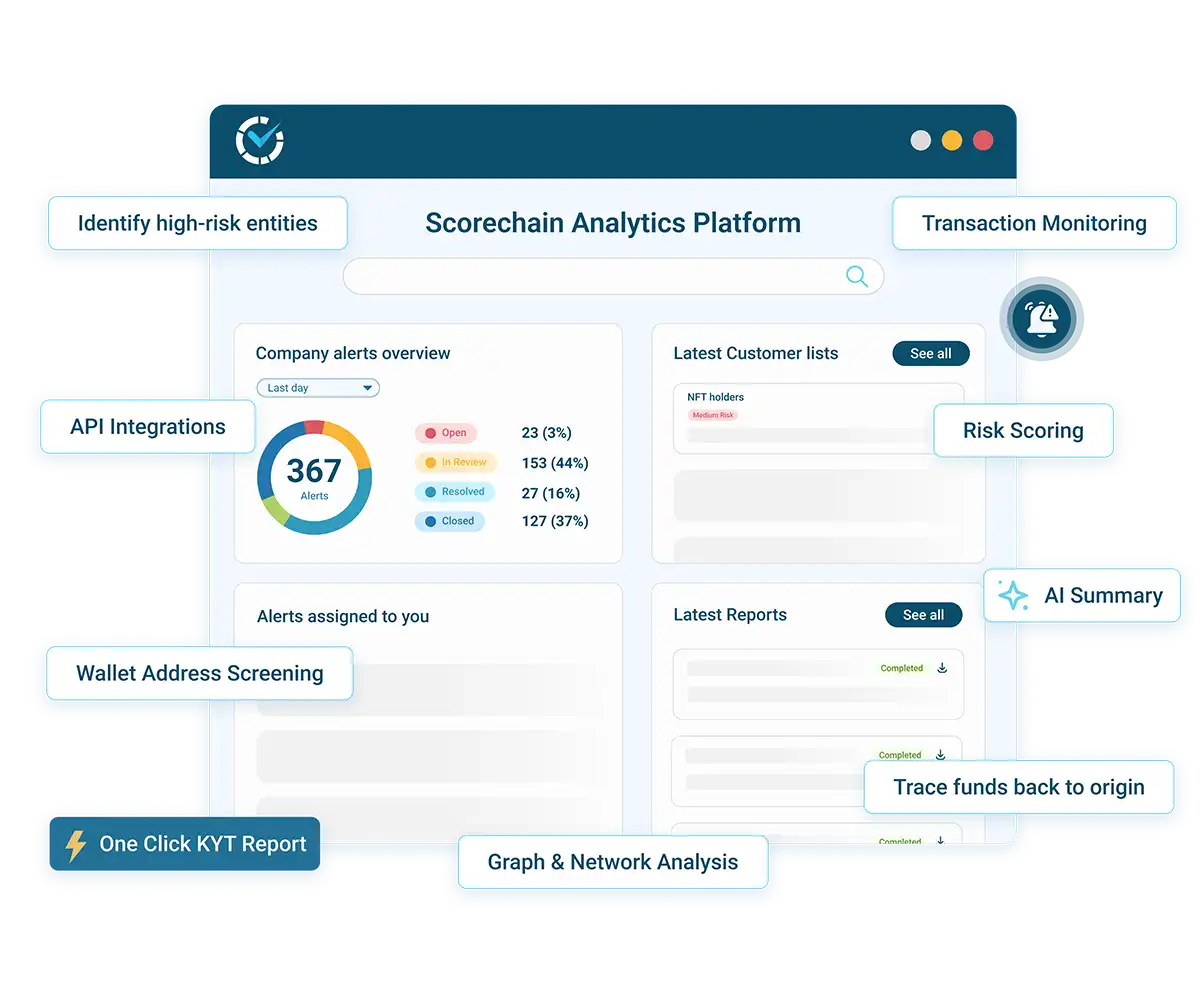
Managing compliance across thousands of daily crypto transactions requires more than manual review. Scorechain's blockchain analytics platform gives crypto exchanges real-time wallet screening, transaction monitoring, risk scoring, and sanctions detection across 21 plus blockchains and 10,000 plus crypto assets.
From onboarding checks to withdrawal screening and SAR support, Scorechain helps exchanges meet their regulatory obligations efficiently and accurately. Visit scorechain.com to learn more or book a demo to see how Scorechain fits into your exchange compliance workflow.
From wallet screening and KYT monitoring to deep-dive investigations, Scorechain gives you everything you need to stay compliant, secure, and audit-ready.