Crypto Anti-Money Laundering Solutions
Crypto AML solutions help detect, prevent, and report illicit activity in digital assets using tools like transaction monitoring, wallet screening, and risk scoring to meet global regulations.
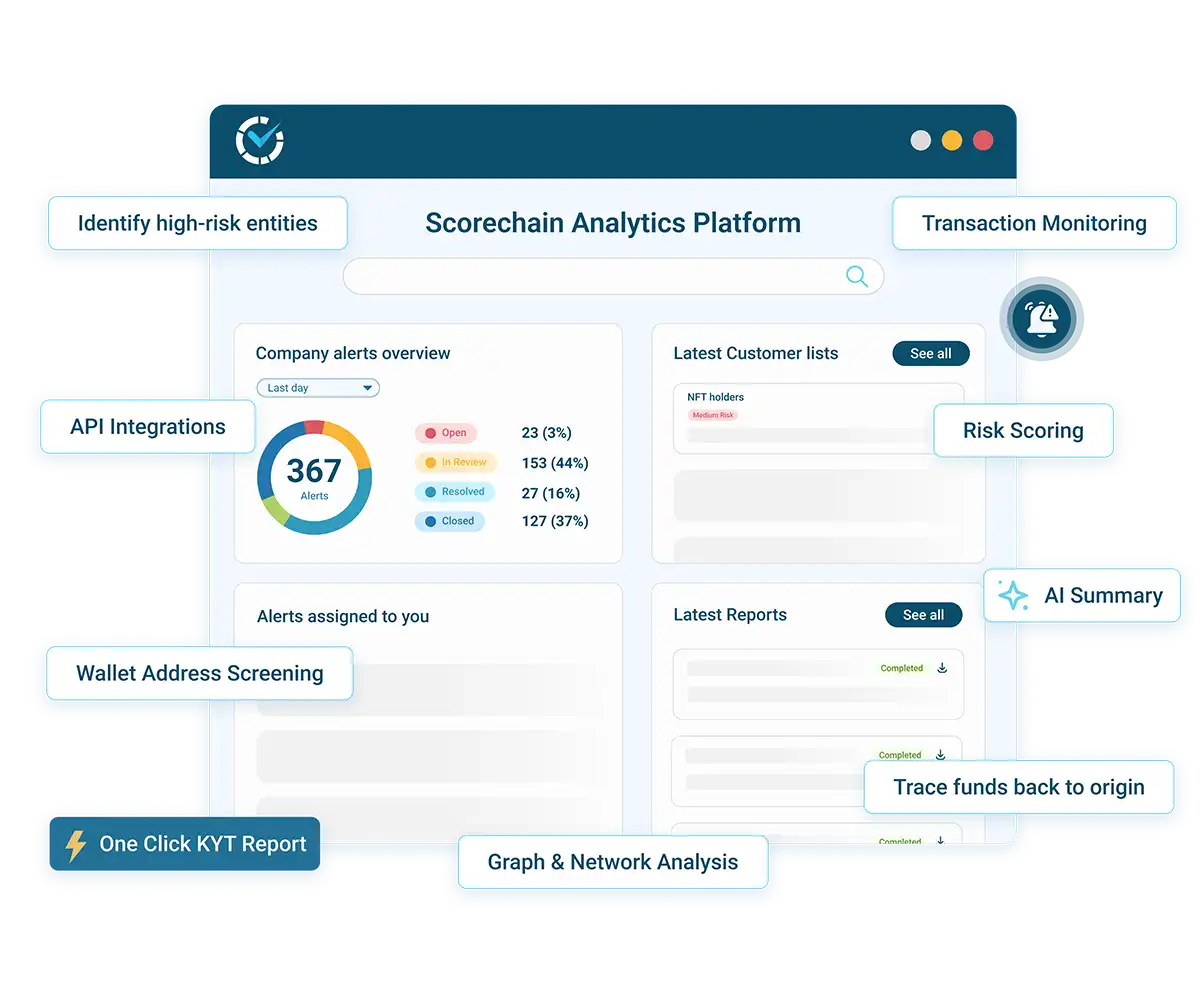
Crypto AML solutions help detect, prevent, and report illicit activity in digital assets using tools like transaction monitoring, wallet screening, and risk scoring to meet global regulations.















The same financial crime risks that exist in traditional banking exist in crypto, often amplified by the speed, borderless nature, and pseudonymity of blockchain transactions. Crypto Anti-Money Laundering (AML) solutions are the tools, technologies, and processes that help businesses detect, prevent, and report money laundering activity involving digital assets.
For any regulated crypto business, having a robust AML solution in place is not a choice. It is a legal obligation.
Traditional AML systems were built for banks and fiat transactions. They are not equipped to handle the unique characteristics of blockchain activity. Crypto AML solutions are purpose-built to address challenges that legacy systems simply cannot manage:
Without dedicated crypto AML tools, compliance teams are working blind.
A comprehensive crypto AML solution typically covers several interconnected functions:
Continuously analyzing on-chain transactions in real time to detect suspicious patterns such as structuring, layering, rapid fund movements, and interactions with high-risk entities.
Checking wallet addresses against sanctions lists, known illicit entity databases, and risk classification systems before processing any transaction or onboarding any customer.
Assigning a quantified risk level to wallets and transactions based on their on-chain history, counterparty exposure, and behavioral patterns. Risk scores help compliance teams prioritize reviews efficiently.
Linking on-chain wallet activity to verified real-world identities through KYC processes, ensuring that the person behind a wallet is who they claim to be.
Generating structured case reports and supporting the filing of Suspicious Activity Reports (SARs) when illicit activity is identified and must be reported to financial authorities.
Collecting and sharing sender and receiver information for qualifying crypto transfers between VASPs, as required under FATF Recommendation 16.
Identifying and labeling wallet addresses that belong to known exchanges, darknet markets, mixing services, gambling platforms, ransomware operators, and other entities relevant to risk assessment.
Several global regulatory frameworks mandate the use of AML solutions for crypto businesses:
AML solutions are relevant across the entire crypto industry:
Founded in 2015 and headquartered in Luxembourg, Scorechain provides a comprehensive crypto AML compliance platform trusted by 350+ teams across 45 countries. It combines regulatory expertise with advanced blockchain analytics to help businesses manage risk and meet global compliance standards.
Scorechain is built specifically for crypto compliance, with a focus on regulatory accuracy and operational efficiency. It prioritizes data privacy, does not share customer data, and offers secure EU-based hosting for regulated businesses.
Whether you are building an AML programme from the ground up or strengthening an existing one, visit scorechain.com to explore the full range of AML solutions, or book a demo to see how Scorechain can be deployed within your compliance workflow today.
From wallet screening and KYT monitoring to deep-dive investigations, Scorechain gives you everything you need to stay compliant, secure, and audit-ready.