Crypto Address Screening
Crypto address screening evaluates individual blockchain addresses for sanctions exposure, illicit links, and risk patterns to ensure AML compliance before transactions.
Crypto address screening evaluates individual blockchain addresses for sanctions exposure, illicit links, and risk patterns to ensure AML compliance before transactions.

















Every cryptocurrency transaction starts and ends with an address. Before any funds move, compliance teams need to know exactly what that address represents and whether interacting with it carries risk.
Crypto address screening is the process of evaluating a blockchain address against sanctions lists, risk intelligence databases, and on-chain behavioral data to determine its risk profile. It is a targeted, address-level compliance check that sits at the heart of any effective crypto AML programme.
While often used interchangeably with wallet screening, address screening is more granular. A single wallet can contain multiple addresses, and each address can carry its own distinct risk history and exposure profile.
A thorough address screening assessment covers multiple dimensions of risk:
These terms are closely related but not identical:
In practice, a complete compliance check often involves both. Address screening provides the granular detail while wallet screening gives the broader risk picture of the entity behind the addresses.
Address screening should be applied consistently across the entire transaction and customer lifecycle:
A single unscreened address can expose a business to consequences that far outweigh the cost of proper compliance controls:
Under FATF guidelines, MiCA, and national AML regulations across major jurisdictions, businesses handling crypto assets are expected to screen addresses as a standard operating procedure, not an optional step.
Effective address screening goes beyond simply checking a static list. The most accurate results come from combining:
Static list checking alone is no longer sufficient. Regulators and sophisticated compliance programmes expect a dynamic, intelligence-driven approach to address screening.
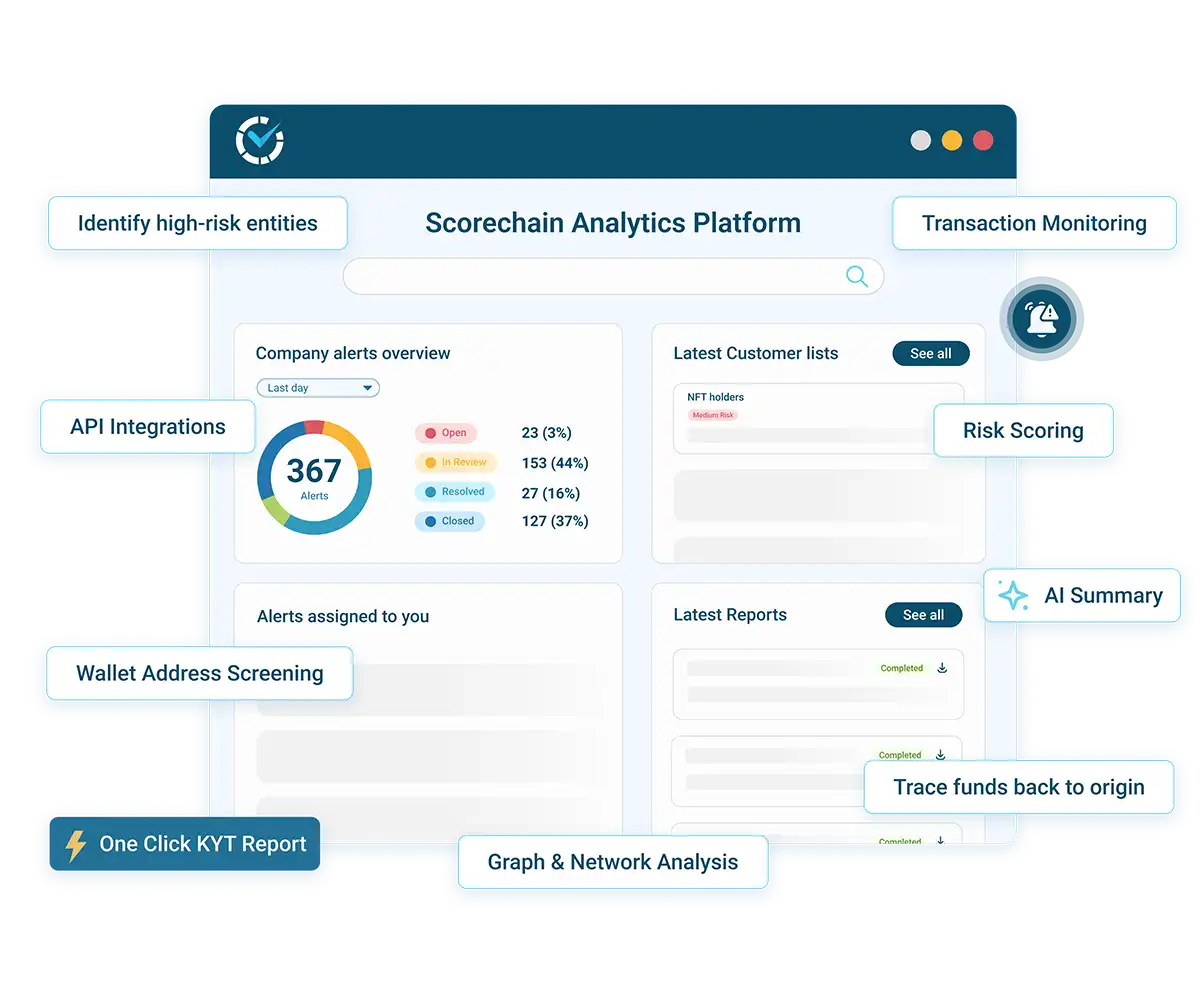
Scorechain's Wallet and Transaction Screening platform delivers comprehensive address-level screening built for the demands of regulated crypto businesses.
Every address screening check through Scorechain delivers:
Trusted by 350 plus compliance teams across 45 countries since 2015, Scorechain brings over a decade of blockchain intelligence experience to every address screening check.
Scorechain makes it easy to run your first address check at no cost and with no commitment required.
Paste any blockchain address into the Scorechain AML Bot on Telegram for an instant risk score delivered in seconds. For a deeper assessment, Scorechain AI generates a full address intelligence report covering entity classification, exposure breakdown across direct and indirect counterparties, behavioral risk signals, and compliance-ready outputs built for regulatory decision-making.
Both options are completely free to try with no credit card needed, giving compliance teams immediate access to the depth and accuracy of Scorechain's address screening intelligence before committing to a full platform deployment.
Visit scorechain.com to explore the full address screening solution, or book a demo to see how Scorechain fits into your compliance workflow.
From wallet screening and KYT monitoring to deep-dive investigations, Scorechain gives you everything you need to stay compliant, secure, and audit-ready.