Bitcoin ETF
A Bitcoin ETF lets investors track Bitcoin's price on traditional stock exchanges without direct ownership. It simplifies access while requiring strict institutional on-chain compliance.
A Bitcoin ETF lets investors track Bitcoin's price on traditional stock exchanges without direct ownership. It simplifies access while requiring strict institutional on-chain compliance.

















For years, gaining exposure to Bitcoin meant buying and holding the asset directly, managing private keys, and navigating crypto exchanges. For institutional investors and everyday retail investors operating within traditional financial systems, that barrier was significant.
A Bitcoin ETF (Exchange-Traded Fund) solves this problem. It is a financial product that tracks the price of Bitcoin and trades on a traditional stock exchange, allowing investors to gain exposure to Bitcoin's price movements without directly purchasing, holding, or managing the cryptocurrency itself.
In January 2024, the US Securities and Exchange Commission approved the first spot Bitcoin ETFs for trading in the United States, marking one of the most significant milestones in the history of crypto adoption by traditional finance.
A Bitcoin ETF operates similarly to any other ETF structure in traditional finance:
Investors never directly own Bitcoin. They own shares in a fund that holds or has exposure to Bitcoin.
There are two distinct types of Bitcoin ETFs, and understanding the difference matters:
Spot Bitcoin ETF:
Bitcoin Futures ETF:
Most institutional and retail investors seeking straightforward Bitcoin exposure prefer spot ETFs due to their direct price tracking.
The approval and growth of Bitcoin ETFs represent a significant shift in how Bitcoin is perceived and accessed within traditional finance:
Following the January 2024 approvals, Bitcoin spot ETFs attracted billions of dollars in inflows within the first weeks of trading, demonstrating the scale of pent-up institutional demand.
Bitcoin ETFs exist within a heavily regulated environment that differs significantly from the broader crypto market:
While Bitcoin ETFs simplify access for investors, they do not eliminate the underlying compliance obligations that exist across the Bitcoin ecosystem.
The growth of Bitcoin ETFs has a direct impact on on-chain compliance activity. ETF issuers and their custodians hold significant amounts of Bitcoin in custody wallets that are active on the Bitcoin blockchain. Every movement of those funds, whether for rebalancing, custody transfers, or redemptions, represents on-chain activity that must be monitored and documented.
For financial institutions and compliance teams working alongside Bitcoin ETF products, key on-chain compliance considerations include:
As Bitcoin ETFs bring institutional capital into the Bitcoin ecosystem, the on-chain compliance demands for custodians, asset managers, and financial institutions increase alongside them.
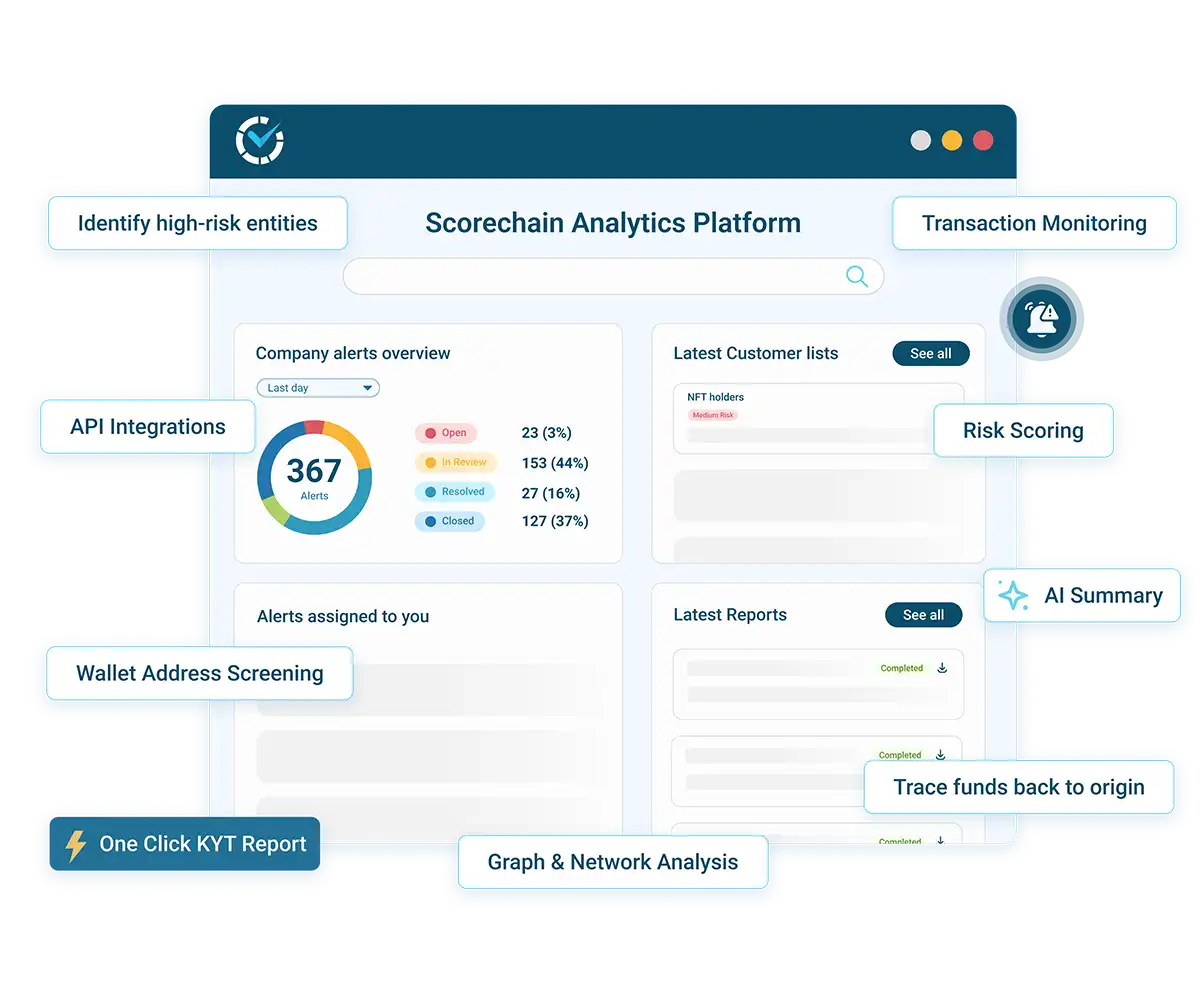
Scorechain's blockchain analytics platform supports Bitcoin compliance with Wallet and Transaction Screening for real-time sanctions and risk checks on Bitcoin addresses, Transaction Monitoring with customizable alert rules for ongoing Bitcoin transaction surveillance, and Flux Analysis for tracing Bitcoin fund flows across complex custody and transfer arrangements.
For financial institutions operating in the Bitcoin ETF space, whether as custodians, asset managers, or compliance teams, Scorechain provides the on-chain intelligence needed to meet AML obligations with confidence and precision.
Scorechain offers two free ways to screen any Bitcoin wallet address with no credit card required.
Paste any Bitcoin address into the Scorechain AML Bot on Telegram for an instant risk score. For a deeper assessment, Scorechain AI generates a comprehensive wallet intelligence report covering entity classification, exposure breakdown, behavioral risk signals, and compliance-ready outputs built for regulatory decision-making.
Visit scorechain.com to explore the full compliance platform, or book a demo to see how Scorechain supports Bitcoin compliance for institutional use cases.
From wallet screening and KYT monitoring to deep-dive investigations, Scorechain gives you everything you need to stay compliant, secure, and audit-ready.