Binance Smart Chain (BSC)
BNB Chain is a fast, low-cost EVM blockchain for DeFi/Web3. Its scale raises AML risks. Scorechain enables compliance with wallet screening, monitoring, and multi-chain analytics.
BNB Chain is a fast, low-cost EVM blockchain for DeFi/Web3. Its scale raises AML risks. Scorechain enables compliance with wallet screening, monitoring, and multi-chain analytics.

















When Ethereum became congested and transaction fees climbed to levels that priced out everyday users, the demand for faster and cheaper alternatives grew rapidly. One of the most widely adopted responses to that problem was Binance Smart Chain.
Binance Smart Chain (BSC), now officially rebranded as BNB Chain, is a blockchain network developed by Binance and launched in September 2020. It was designed to run smart contracts while offering significantly lower transaction fees and faster block times compared to Ethereum. Its compatibility with Ethereum's tooling made it immediately accessible to developers and users already familiar with the Ethereum ecosystem.
Today BNB Chain is one of the most active blockchain networks in the world by transaction volume, hosting thousands of decentralized applications, DeFi protocols, and token projects.
BNB Chain uses a consensus mechanism called Proof of Staked Authority (PoSA), a hybrid model that combines elements of Delegated Proof of Stake and Proof of Authority. Under this model:
The limited validator set makes BNB Chain more centralized than networks like Bitcoin or Ethereum, but this trade-off is precisely what enables its speed and low cost.
One of BNB Chain's most significant design decisions was full EVM (Ethereum Virtual Machine) compatibility. This means:
This compatibility dramatically lowered the barrier to entry for both developers migrating from Ethereum and users already holding MetaMask or similar wallets.
BNB is the native cryptocurrency of BNB Chain and serves multiple functions across the Binance ecosystem:
BNB Chain became a major hub for DeFi activity, attracting significant liquidity and user activity due to its low fees and fast confirmation times. Notable platforms built on BNB Chain include:
The low cost of transactions on BNB Chain made it particularly popular for yield farming, token launches, and retail DeFi activity that would have been cost-prohibitive on Ethereum during periods of high gas fees.
BNB Chain's low fees, high speed, and EVM compatibility that made it attractive for legitimate use cases also made it attractive for illicit activity. Compliance teams working with BNB Chain face several specific challenges:
Exchanges, custodians, and financial institutions handling BNB or BEP-20 tokens must apply the same KYC, AML, and transaction monitoring obligations as they would for any other supported digital asset under FATF guidelines and MiCA.
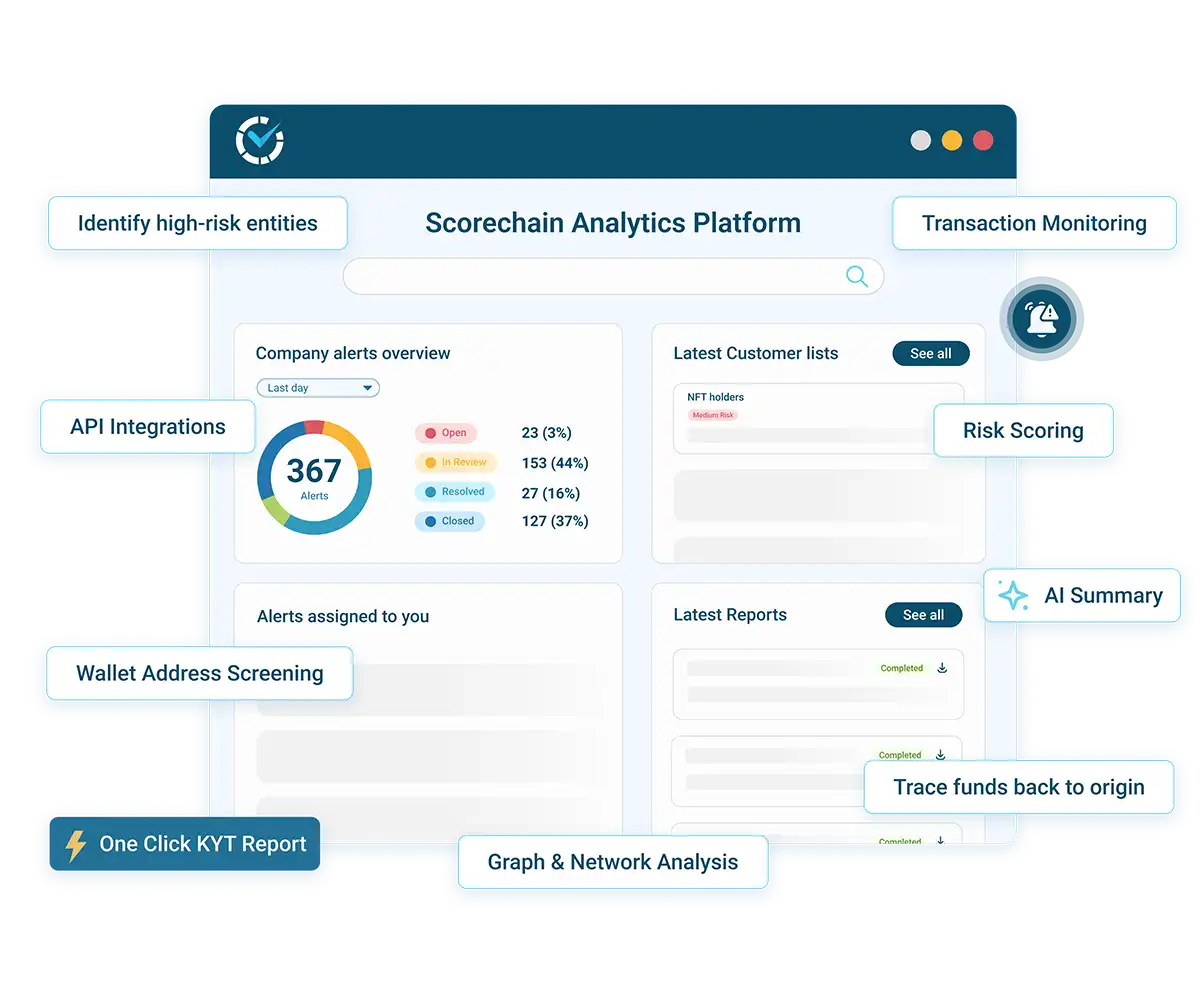
BNB Chain is one of the blockchains supported by Scorechain's blockchain analytics platform, giving compliance teams direct access to wallet screening, transaction monitoring, and risk intelligence for BNB and BEP-20 token activity.
Scorechain's capabilities for BNB Chain compliance include:
For crypto businesses and financial institutions handling BNB or BEP-20 assets, Scorechain provides the on-chain intelligence needed to meet AML obligations across one of the most active blockchain networks in the world.
Scorechain offers two free ways to screen any BNB Chain wallet address instantly with no credit card required.
Paste any BNB Chain address into the Scorechain AML Bot on Telegram for an instant risk score. For a deeper assessment, Scorechain AI generates a comprehensive wallet intelligence report covering entity classification, exposure breakdown, behavioral risk signals, and compliance-ready outputs built for regulatory decision-making.
Visit scorechain.com to explore the full compliance platform, or book a demo to see how Scorechain supports BNB Chain compliance in practice.
From wallet screening and KYT monitoring to deep-dive investigations, Scorechain gives you everything you need to stay compliant, secure, and audit-ready.