Steps for a Bank Onboarding a Crypto Customer: A Compliance-First Approach
How Banks Can Safely Onboard Crypto Customers and Stay Compliant
With institutional crypto adoption growing, more banks are being asked to serve crypto businesses and individuals. Onboarding these customers calls for a structured compliance framework that identifies on-chain risk early and meets supervisory expectations.
The rules have shifted in recent years:
- US: In 2025, the OCC, FDIC and Federal Reserve withdrew their earlier prior-approval requirements for bank crypto activities. Supervisors now review these activities through normal supervision.
- EU: Under MiCA, a credit institution that wants to offer crypto-asset services must notify its home regulator at least 40 working days before it starts.
- Basel Committee: In February 2026, the Committee expedited a targeted review of its prudential standard for banks’ cryptoasset exposures.
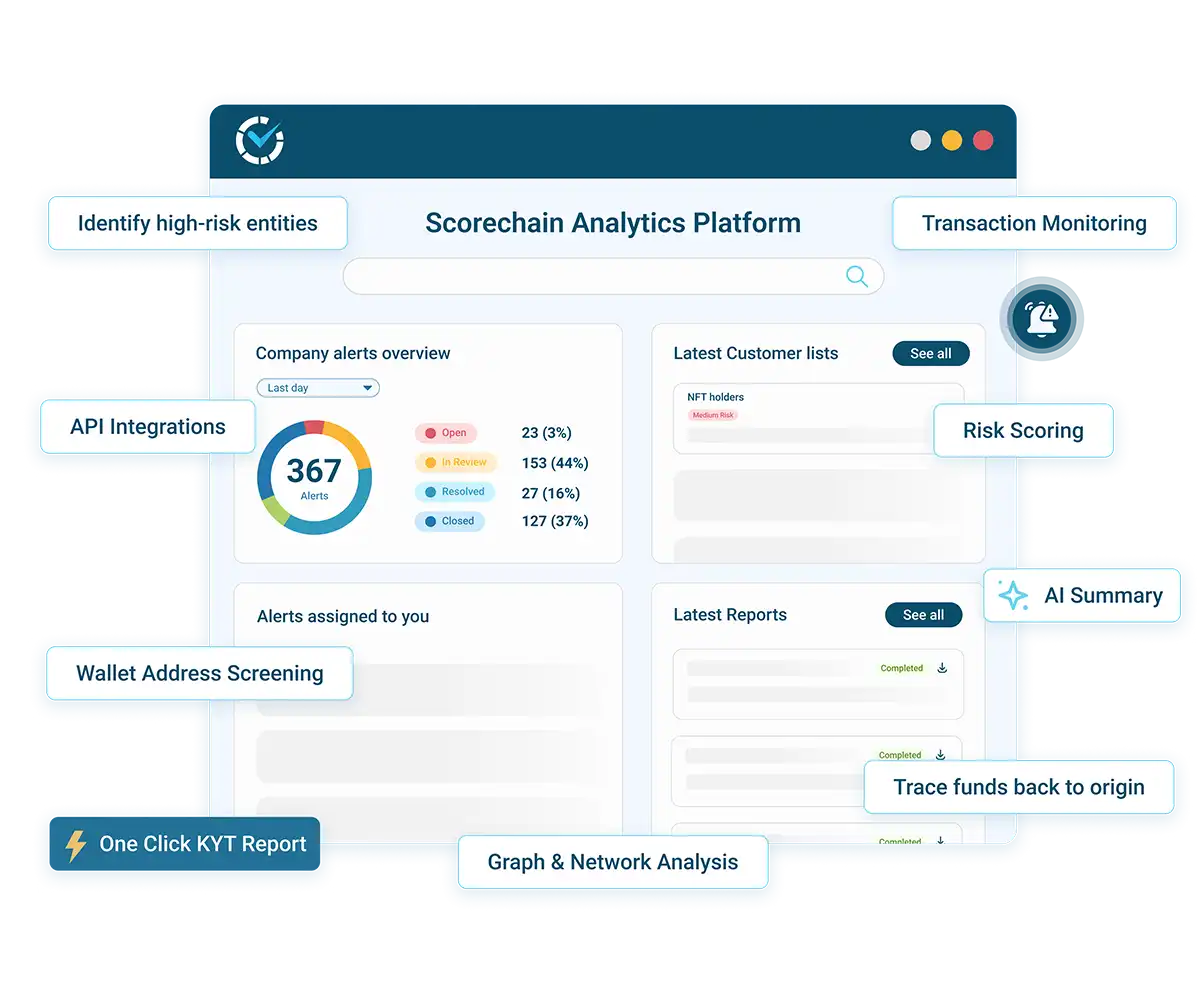
At Scorechain, we help banks run crypto onboarding with AML compliance, risk management and transaction monitoring tools, so every crypto relationship starts on a documented, risk-based footing.
Steps for a Bank to Onboard a Crypto Customer
Step 1: Perform Initial Risk Assessment
- Evaluate the customer’s business model, crypto exposure and on-chain transaction history.
- Classify customers as low, medium or high risk under your risk-based approach (RBA), based on their crypto activities.
Step 2: Conduct Enhanced KYC and Due Diligence (KYB for Businesses)
Step 3: Screen Wallet Addresses for Risks
- Use crypto wallet screening to detect direct and indirect exposure to sanctioned entities, darknet markets and other illicit activity.
- Keep monitoring the customer’s wallets to track changes in transaction behaviour over time.
Step 4: Implement Ongoing Transaction Monitoring
- Use crypto transaction monitoring to watch customer transactions in real time for unusual patterns.
- Flag and investigate suspicious activity linked to money laundering or fraud, and escalate it for suspicious activity reporting where required.
Step 5: Ensure Regulatory Compliance and Reporting
- Align with the FATF Recommendations, including the Travel Rule where the bank sends or receives crypto transfers. Also align with the EU Transfer of Funds Regulation and MiCA, FinCEN rules under the Bank Secrecy Act, and other local crypto regulations.
- Keep audit trails of every screening, alert and decision so you can evidence your controls in supervisory reviews.
Step 6: Set Up a Risk-Based Banking Policy for Crypto Clients
- Set clear criteria for which crypto businesses and individuals qualify for banking services.
- Define acceptable use policies and risk thresholds for crypto transactions.
How Scorechain Helps Banks Onboard Crypto Customers
At Scorechain, we give banks the tools to assess, monitor and reduce crypto-related risk throughout the onboarding process and the life of the relationship.
Scorechain’s Crypto Compliance Solutions for Banks:
- AML and KYT screening: Check a customer’s wallets and transactions before onboarding with KYA and KYT reports, including separate risk scores for incoming and outgoing funds.
- Real-time crypto transaction monitoring: Track customer transactions with alert scenarios based on amount, direction and risk indicators.
- Sanctions and blacklist screening: Detect exposure to wallets linked to sanctioned entities, including those on OFAC lists, and flag links to high-risk jurisdictions such as those identified by FATF.
- Compliance reporting: Produce audit-ready reports and case files for internal review and regulators.
- Risk-based decision support: Adjust risk scoring by entity or entity type to match your bank’s risk appetite.
Who Needs a Crypto Customer Onboarding Strategy?
- Banks and financial institutions: Onboard and manage crypto clients within their risk appetite.
- Payment processors and neobanks: Apply the same controls to crypto-linked payment flows.
- Regulators and compliance teams: Assess how institutions manage crypto-related risk.
- Crypto businesses and institutional investors: Prepare the evidence banks need to open and keep accounts.
Onboard Crypto Customers Securely and Compliantly
Banks can serve crypto customers when they have the right compliance framework in place. Scorechain helps you build an onboarding process that is secure, scales with demand and stands up to supervisory review. For more on how banks use Scorechain, explore our compliance solutions for financial institutions, or book a demo to see the onboarding workflow on your own use case.