AML Wallet Check
An AML wallet check screens crypto wallet addresses for sanctions, illicit activity, and risk exposure, helping businesses prevent financial crime and stay compliant with AML regulations.
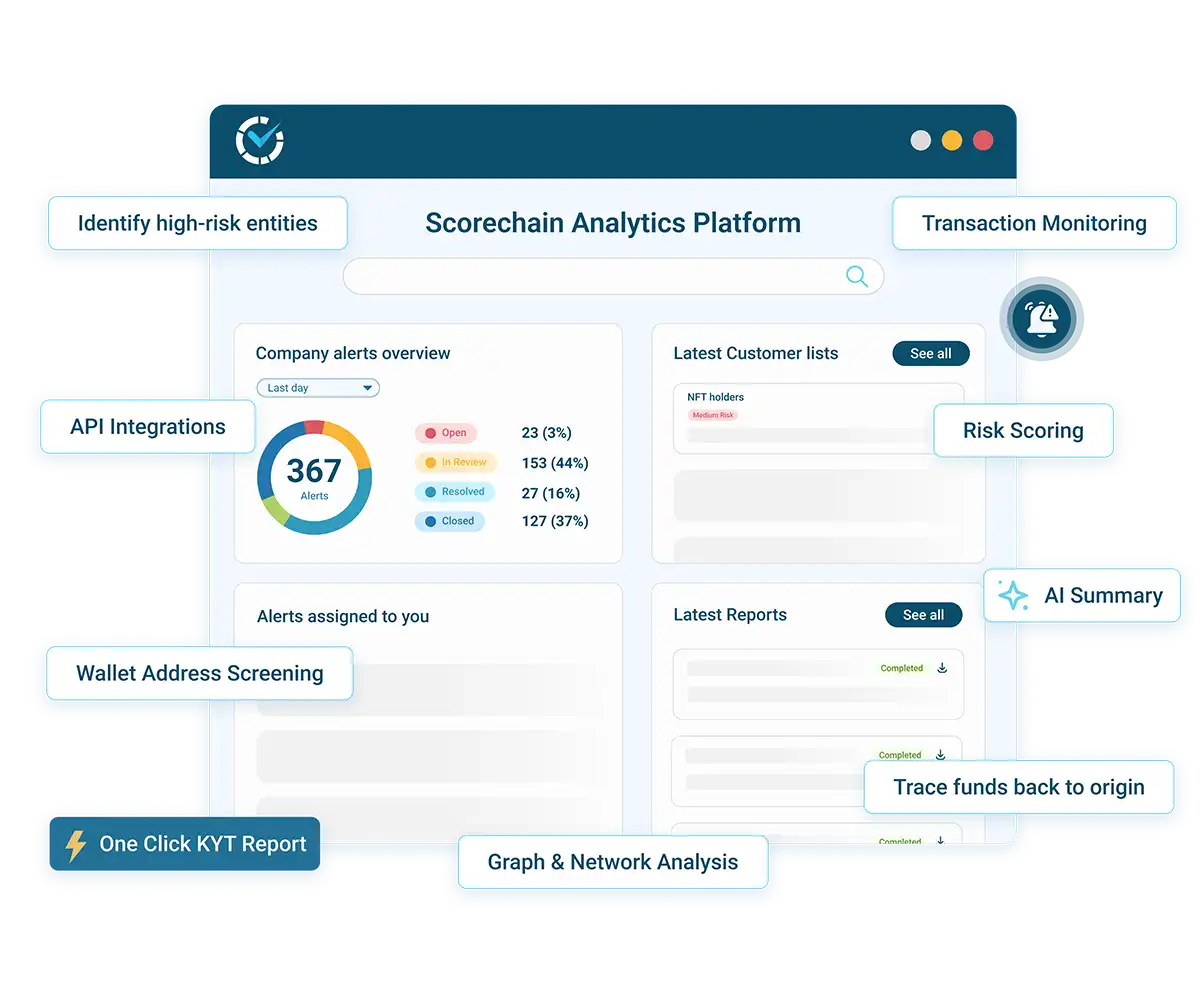
An AML wallet check screens crypto wallet addresses for sanctions, illicit activity, and risk exposure, helping businesses prevent financial crime and stay compliant with AML regulations.














In the fast-evolving world of cryptocurrency, AML wallet checks are no longer optional. As regulators tighten the rules around MiCA, FATF, EU AMLD, OFAC, and FinCEN, every crypto exchange, DeFi platform, financial institution, and fintech needs a reliable way to screen wallet addresses for risk before money moves.
This guide walks through what an AML wallet check is, why it matters, how to do it well, and how Scorechain helps 350+ compliance and digital asset teams (including CACEIS, Swissquote, Banque Delubac, DZ Bank, Fireblocks, Taurus, DFNS, and Nuvei) keep their operations safe and audit-ready.
Try a Free Wallet Check or Book a Demo
An AML (Anti-Money Laundering) wallet check is the process of screening a cryptocurrency wallet address to detect links to illicit activity, sanctioned entities, mixers, scams, ransomware, darknet markets, and other high-risk categories. It uses blockchain analytics combined with off-chain intelligence such as entity attribution, sanctions data, and verified VASP records to flag suspicious wallets before you transact with them.
A well-executed AML wallet check answers three questions in seconds:
Scorechain delivers all three through its wallet screening platform, drawing on a directory of more than 1 billion labeled entities and 2,700+ verified VASPs across 21+ blockchains.
The pressure on crypto businesses comes from three directions at once. Regulators are publishing harder rules and shorter timelines. Banking partners are demanding stronger controls before they hold accounts. Customers expect platforms to keep them safe from fraud and tainted funds.
AML wallet checks are how all three are addressed at the same time.
Scorechain customers regularly catch exposure that simpler tools miss. COINIUM identified a customer's TRON wallet with EU and OFAC sanctions exposure, preventing a major compliance breach. EXMO discovered indirect exposure to an Iranian entity through outgoing-transaction analysis, enabling immediate internal escalation.
Effective wallet screening covers more than a single sanctions list lookup. The components that matter most include:
The workflow looks the same whether you are a compliance officer triaging a flagged deposit or an analyst preparing a counterparty review.
Most lightweight Scorechain integrations are live within days. Full enterprise deployments typically take a few weeks.
Scorechain combines a decade of blockchain analytics expertise with tools built for the daily reality of compliance teams.
Before committing to a full deployment, you can experience Scorechain's intelligence at no cost.
Both run on the same data foundation that powers Scorechain's enterprise platform.
Crypto is full of opportunity, but also full of risk. A reliable AML wallet check is what keeps your business operating safely, aligned with regulations, and trusted by users, partners, and regulators.
Ready to strengthen your AML program? Start with a free wallet check on the Scorechain AML Bot or Scorechain AI or book a demo to see how the full platform fits into your compliance workflow.
What happens if I do not perform AML wallet checks?
You risk regulatory penalties, banking partner reviews, account freezes, and reputational damage. Without wallet checks, you also lose the ability to defend a decision to a regulator or auditor when challenged.
Can Scorechain handle large volumes of wallet checks?
Yes. Scorechain is built to scale and supports enterprise-grade throughput, serving 350+ compliance and digital asset teams including major banks, custodians, and exchanges.
How does Scorechain's wallet check integrate with my platform?
Scorechain is API-first. REST APIs, SDK, and webhooks allow real-time wallet screening to be embedded into your onboarding, transaction, and KYC pipelines. Lightweight integrations usually go live within days, with full enterprise rollouts in a few weeks.
Which blockchains does Scorechain cover for wallet checks?
Scorechain covers 21+ chains including Bitcoin, Ethereum, Tron, Solana, BNB Smart Chain, Polygon, Arbitrum One, Avalanche, Cardano, XRP Ledger, Litecoin, Dogecoin, Stellar, Tezos, TON, Base, Optimism, Mantle, Blast, Ink, Bitcoin Cash, and Dash, plus major stablecoins and token standards.
Does Scorechain detect indirect sanctions exposure?
Yes. Scorechain traces both direct and indirect exposure across multiple hops, regularly catching links to sanctioned, illicit, or high-risk entities that simpler screening tools miss.
Can I try Scorechain's AML wallet check for free?
Yes. Use the Telegram AML Bot for instant wallet risk checks, or generate a full AI-powered wallet report at Scorechain AI, both with no credit card required.
From wallet screening and KYT monitoring to deep-dive investigations, Scorechain gives you everything you need to stay compliant, secure, and audit-ready.