Crypto Wallet Address
A crypto wallet address is a unique identifier used to send and receive digital assets, enabling transaction tracking, risk assessment, and compliance through blockchain transparency and analytics tools.
A crypto wallet address is a unique identifier used to send and receive digital assets, enabling transaction tracking, risk assessment, and compliance through blockchain transparency and analytics tools.

















Sending cryptocurrency requires knowing exactly where to send it. That destination is a crypto wallet address.
A crypto wallet address is a unique string of alphanumeric characters that identifies a specific wallet on a blockchain network. It functions similarly to a bank account number. Anyone who wants to send you cryptocurrency needs your wallet address, and anyone who has it can view your transaction history on a public blockchain explorer. Here are real examples of wallet address formats across major blockchains:
Bitcoin (BTC)
1A1zP1eP5QGefi2DMPTfTL5SLmv7DivfNa
(the very first Bitcoin address ever, belonging to Satoshi Nakamoto's genesis block)
Ethereum (ETH)
0x742d35Cc6634C0532925a3b844Bc454e4438f44e
Solana (SOL)
7EcDhSYGxXyscszYEp35KHN8vvw3svAuLKTzXwCFLtV
XRP
rN7n3473SaZBCG4dFL83w7PB5yMEcSRREx
Tron (TRX)
TLa2f6VPqDgRE67v1736s7bJ8Ray5wYjU7
Wallet addresses vary in format depending on the blockchain:
Each address is mathematically derived from a private key using cryptographic functions, making it virtually impossible to reverse-engineer the private key from the address alone.
Wallet addresses are not created randomly. They follow a precise cryptographic process:
This means every wallet address is cryptographically linked to its private key without ever exposing it. Lose the private key and access to the wallet is permanently lost.
Not all wallet addresses function the same way:
Every wallet address carries a history. Every transaction it has ever sent or received is permanently recorded on the blockchain and publicly accessible. For compliance teams, this transparency is both an opportunity and a responsibility.
Key compliance considerations around wallet addresses include:
A single unscreened wallet address can expose a business to significant regulatory and reputational risk.
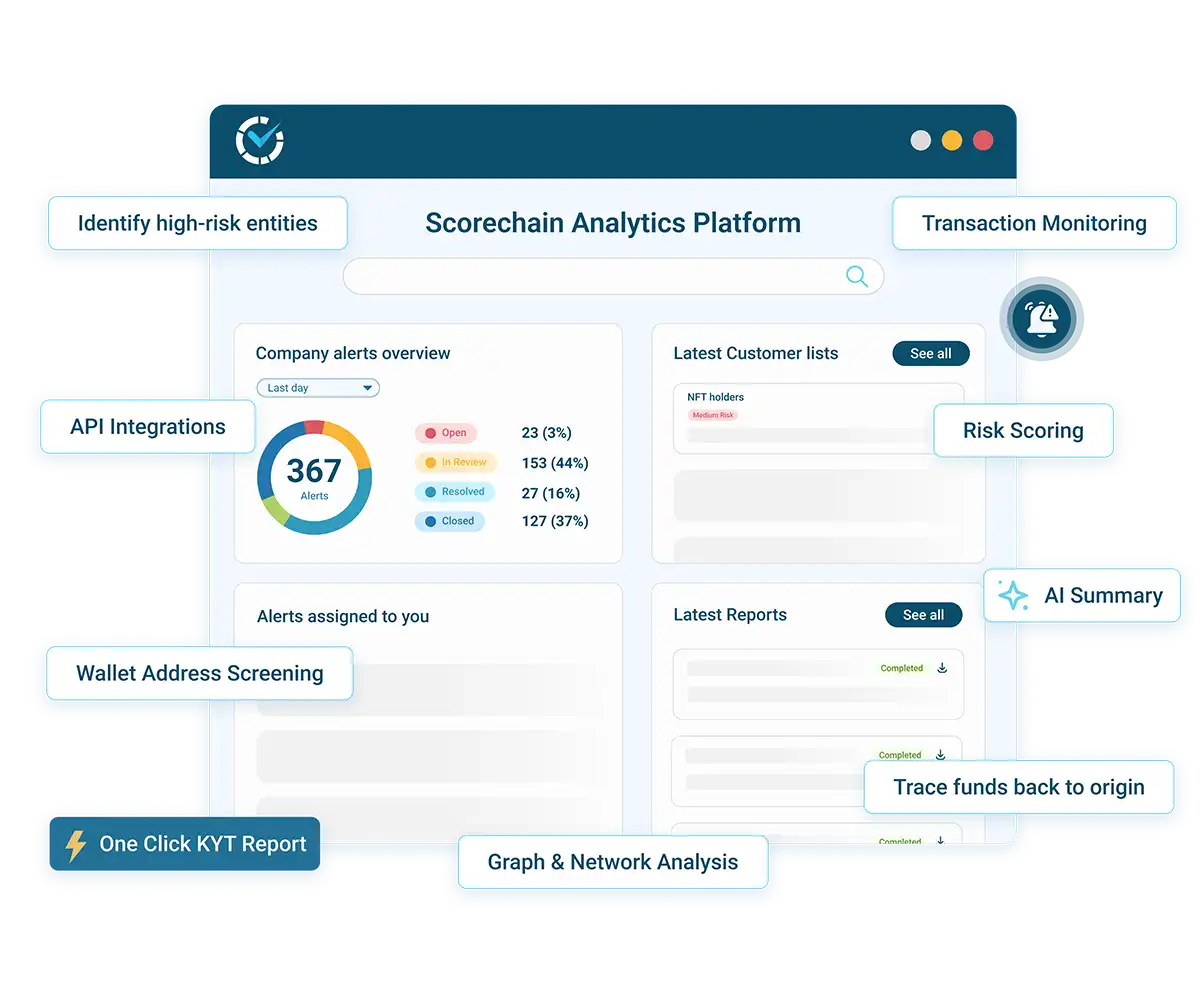
Screening and monitoring wallet addresses across multiple blockchains manually is not scalable. Scorechain's blockchain analytics platform allows compliance teams to screen any wallet address instantly, assess its full transaction history, identify connections to high-risk entities, and generate risk scores in real time across 21 plus blockchains and 10,000 plus crypto assets.
Whether you are onboarding a new customer, processing a withdrawal, or investigating a suspicious transaction, Scorechain gives you the on-chain intelligence needed to make fast, confident compliance decisions. Visit scorechain.com to learn more, or book a demo to see wallet address screening in action.
From wallet screening and KYT monitoring to deep-dive investigations, Scorechain gives you everything you need to stay compliant, secure, and audit-ready.