













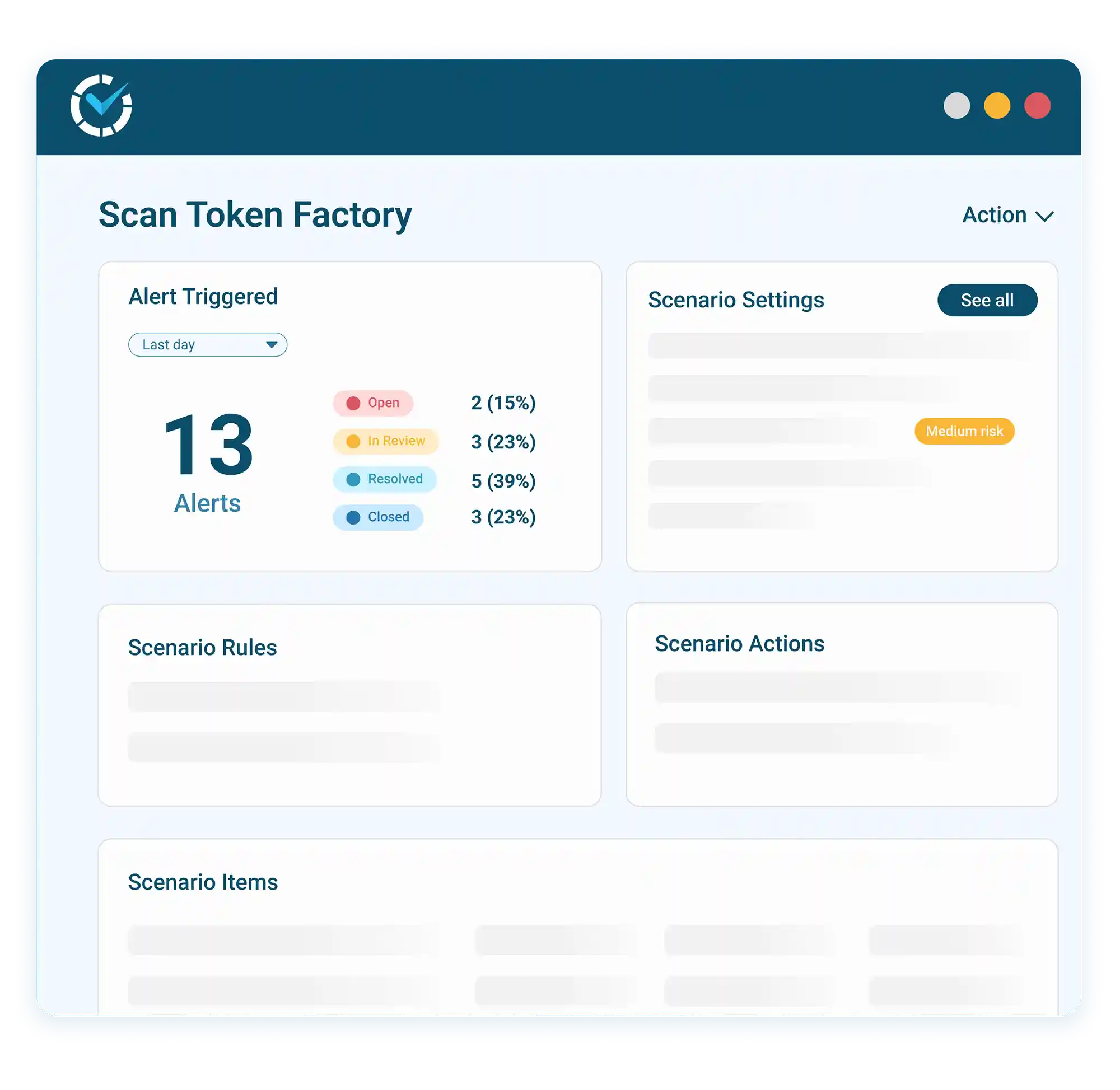
Detect suspicious activity over time by applying real-time and periodic monitoring scenarios to on-chain transactions and wallets.
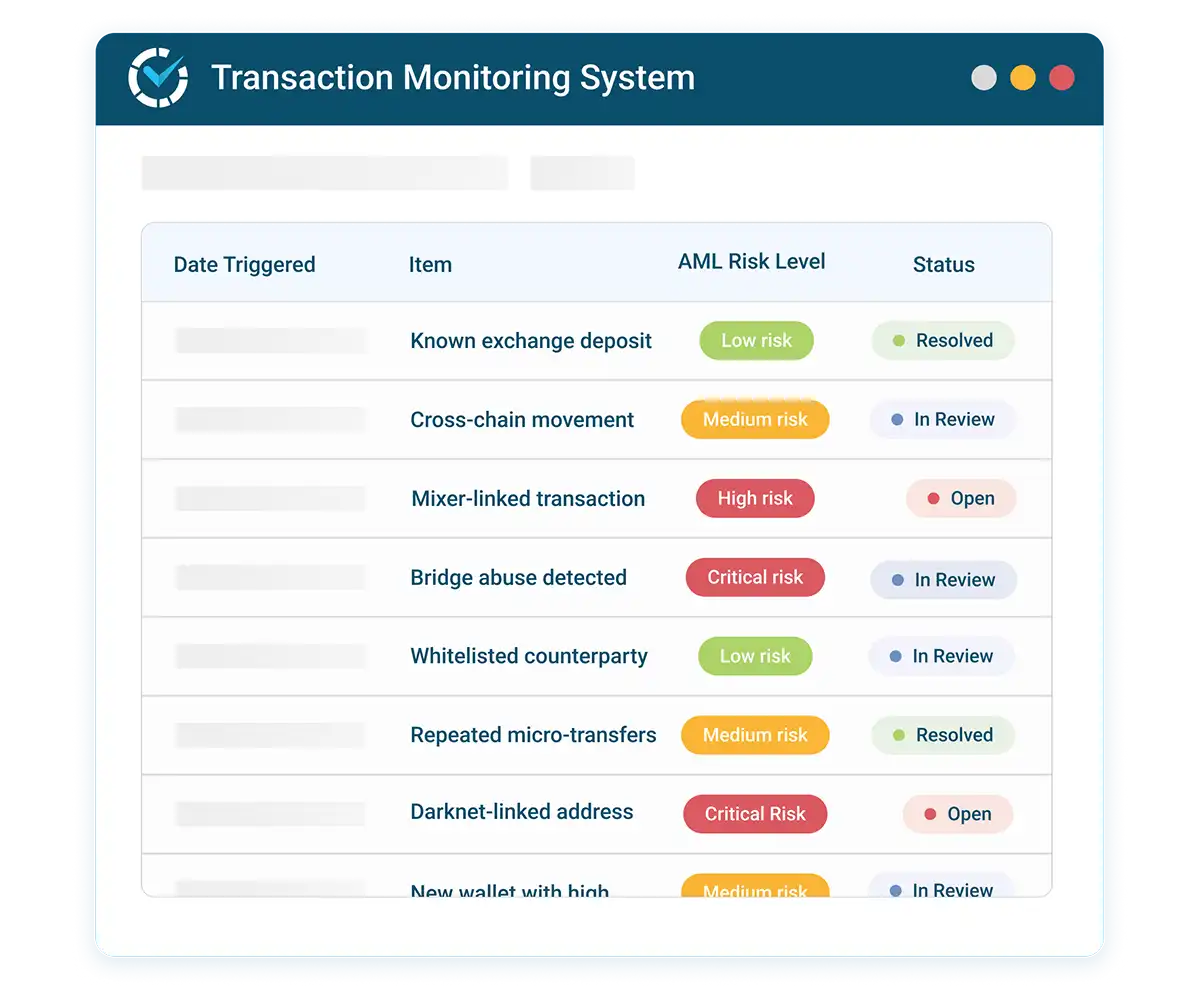






Monitor on-chain activity continuously to detect evolving risk patterns.
Monitor activity in real time or at defined intervals.
Apply configurable monitoring scenarios aligned with your risk policies.
Trigger alerts or enforce operational actions when integrated with custody providers.
Transaction Monitoring enables organizations to detect risk after on-chain interaction has started. By applying configurable scenarios to ongoing activity, teams can identify suspicious behavior, respond to emerging risks, and enforce controls over time rather than relying on one-time assessments.
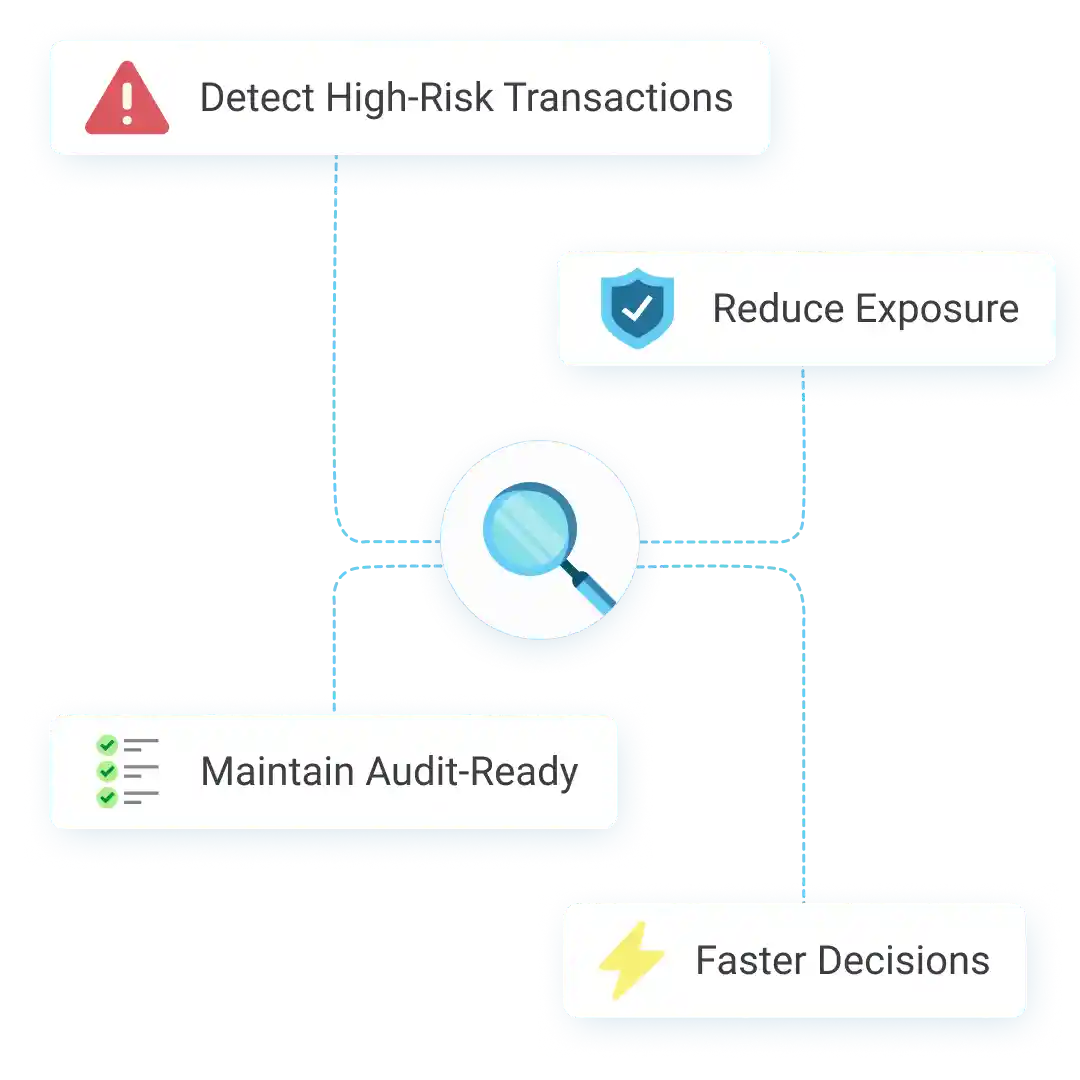
Real time monitoring that strengthens AML controls and enables faster, confident response.
Detect suspicious on-chain activity as it occurs
Apply monitoring logic aligned with internal risk policies
Trigger alerts or operational actions based on scenarios
Support compliance and ongoing risk oversight
Adapt monitoring to evolving risk patterns

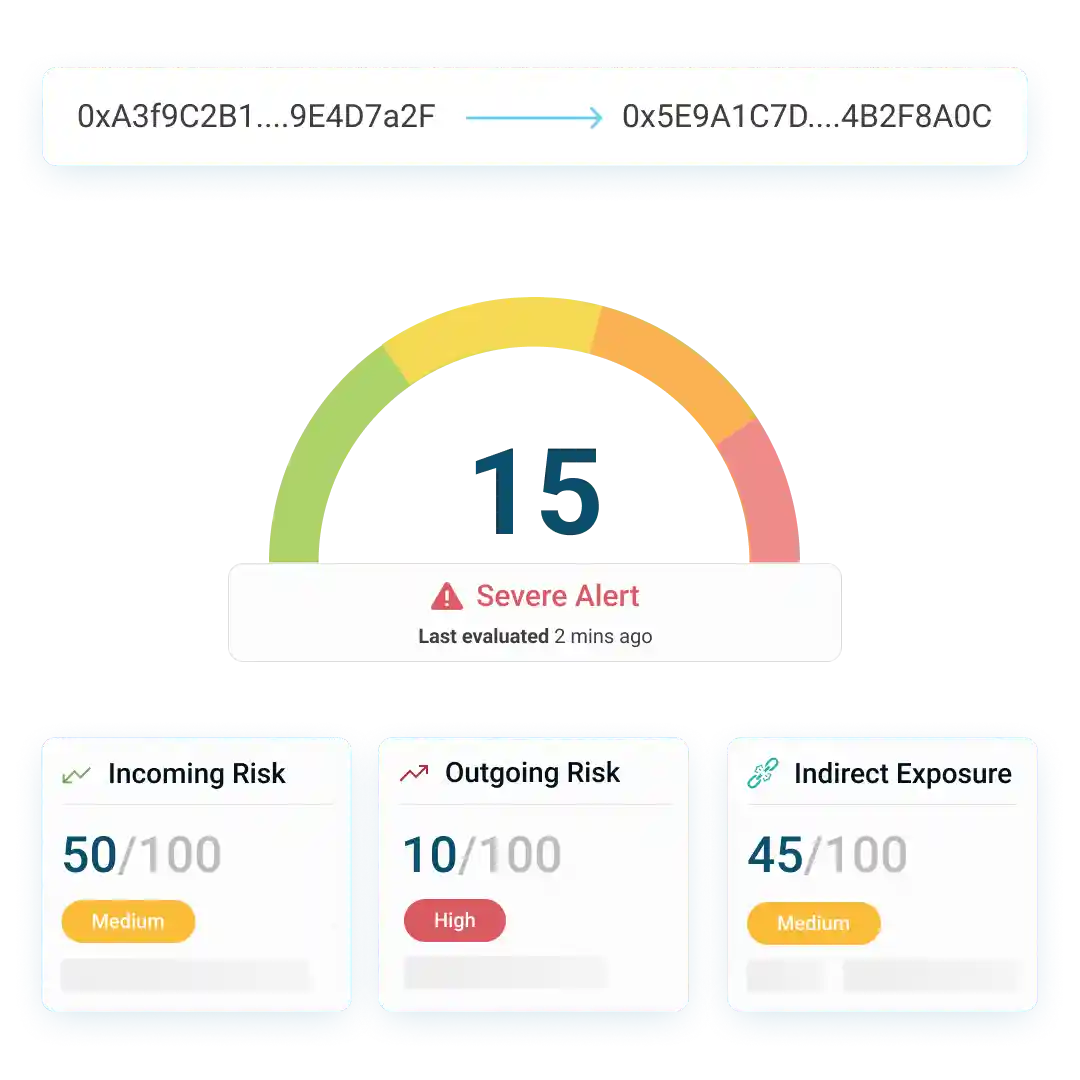
Monitor transactions and wallet activity on an ongoing basis using scenario-based logic, allowing teams to detect suspicious behavior that may emerge after an initial interaction has already occurred.

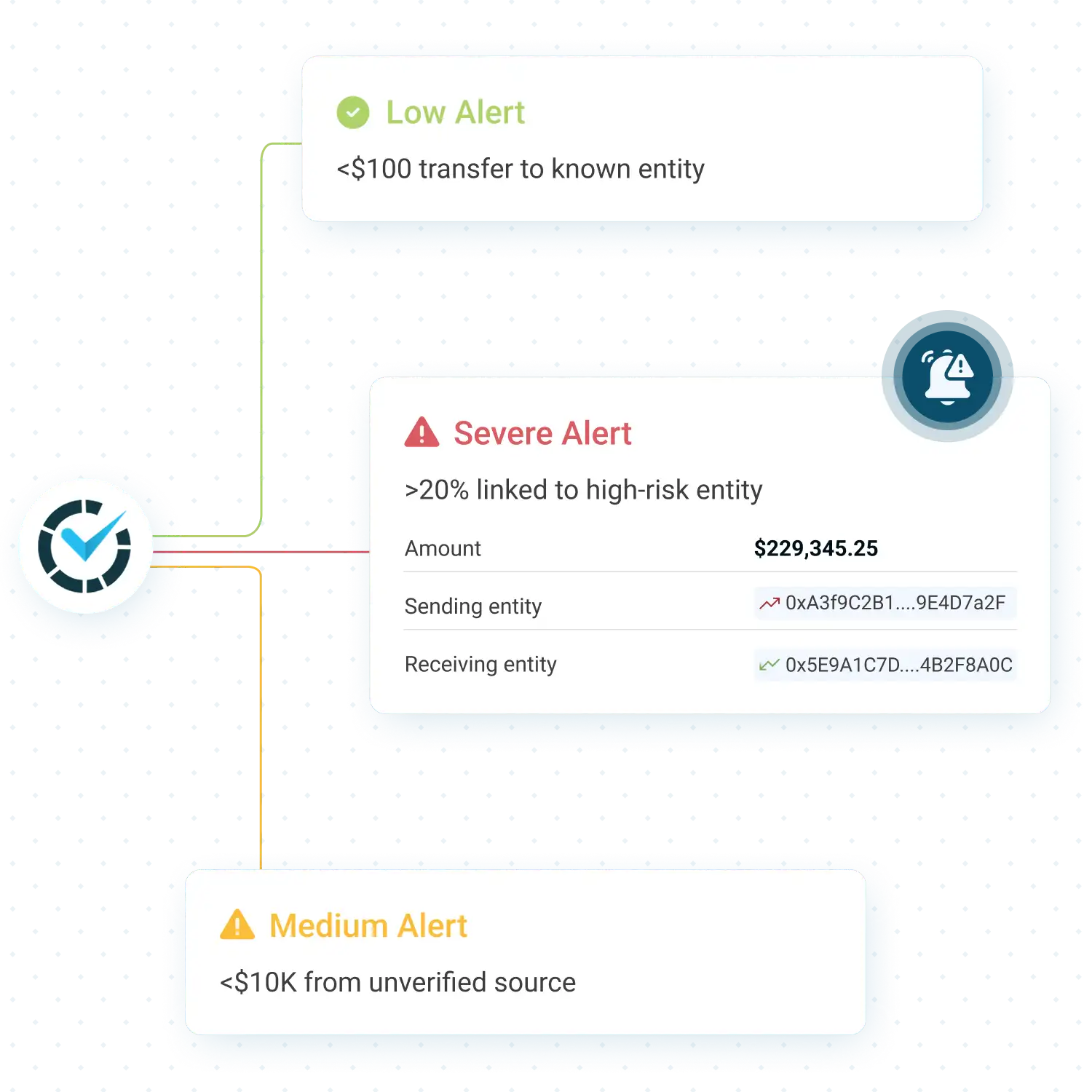
Define and customize monitoring scenarios based on transaction behavior, velocity, exposure, and other risk signals, ensuring monitoring logic reflects your internal policies and risk appetite.

Apply monitoring scenarios in real time or on a periodic basis, such as daily, monthly, or yearly checks, depending on operational needs and regulatory requirements.

Generate alerts or trigger operational actions, such as transaction blocking or asset freezing, when integrated with custody providers or internal workflows.

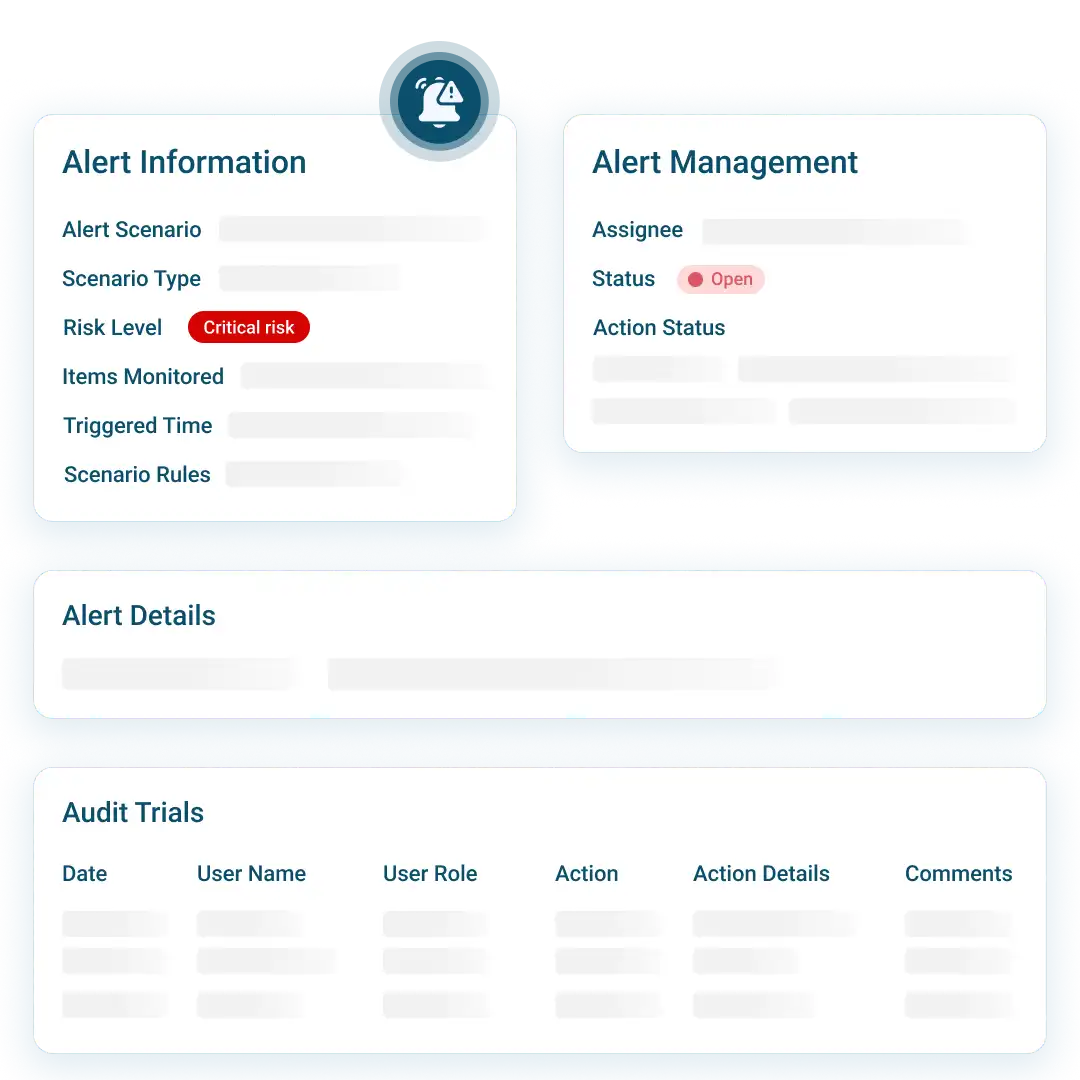
It lets you group alerts, review transaction data, analyse wallet activity, and document findings in a structured way.
Wallet Screening provides a point-in-time assessment, while Transaction Monitoring continuously evaluates activity using scenario-based logic.
Alerts are triggered when monitoring scenarios detect behavior matching defined risk conditions, based on client configuration.
Yes. When integrated with custody providers, monitoring can trigger alerts or operational actions such as transaction blocking or asset freezing.
Yes. Monitoring logic, scenarios, thresholds, and actions are fully configurable to align with client-specific risk policies.
Monitor on-chain activity over time and respond to risk using configurable monitoring scenarios.